

Whether you're a beginner afraid to open your mouth or an intermediate learner stuck in a plateau, this guide covers every tool, platform, and method you need to finally speak English with confidence.
Why Speaking Is the Hardest Skill to Master
Most English learners spend years in class — reading textbooks, memorizing grammar rules, passing exams — and still freeze the moment they have to speak.
Sound familiar?
The problem isn't your English. It's the lack of speaking practice.
Reading and writing are solo activities. Speaking requires someone to talk to, real-time feedback, and the courage to make mistakes. Traditional learning rarely provides any of these.
The good news? In 2026, you have more tools than ever to practice speaking — many of them completely free.
This guide breaks down 40+ resources by category so you can find exactly what fits your level, schedule, and learning style.
🤖 AI Speaking Practice Tools
AI tutors have changed the game. No scheduling, no embarrassment, no judgment — just you and a conversation partner available 24/7.
TalkMe
Website: talkme.ai
Cost: Free to start
TalkMe pairs you with lifelike AI tutors across dozens of conversation scenarios — job interviews, daily small talk, travel situations, business meetings. Unlike most language apps, TalkMe focuses entirely on speaking and listening, not reading or writing exercises.
Perfect for: Learners who want realistic conversation practice without the pressure of talking to a real person.
ELSA Speak
Website: elsaspeak.com
Cost: Free (premium features paid)
ELSA stands for English Language Speech Assistant. It uses advanced AI to analyze your pronunciation at the phoneme level and tells you exactly which sounds need work.
Perfect for: Learners with pronunciation anxiety or anyone preparing for IELTS/TOEFL speaking sections.
VivaLingua
Website: vivalingua.ai
Cost: Free trial available
An AI conversation platform focused on low-pressure, topic-based chats. Great for warming up your speaking muscles before tackling real conversations.
EnglishMate
Website: englishmate.io
Cost: Free
AI-powered conversation partner for free-form English practice. No scripts, no rigid lessons — just talk.
TalkAny
Website: talkany.app
Cost: Free, no registration required
One of the most accessible AI speaking tools. No sign-up needed — just open and start talking. Provides instant grammar and pronunciation feedback.
🌍 Language Exchange Platforms
The best way to practice speaking is with real humans. Language exchange connects you with native English speakers who want to learn your language — you help each other.
HelloTalk
Website: hellotalk.com
Cost: Free (premium features available)
HelloTalk is the most popular language exchange app in the world. Features include:
Voice messages and live voice calls
Built-in translation and correction tools
A social feed where you can post and get feedback from natives
Over 150 languages supported
Perfect for: Learners who want regular contact with native speakers and a supportive community.
Tandem
Website: tandem.net
Cost: Free
Tandem matches you with language exchange partners based on your goals and interests. You can chat via text, audio, or video. Unlike HelloTalk, Tandem has a stronger vetting process for tutors.
My Language Exchange
Website: mylanguageexchange.com
Cost: Free (some features require registration)
One of the oldest and most reliable language exchange platforms. Supports Skype calls, text chat, and group conversation sessions.
Conversation Exchange
Website: conversationexchange.com
Cost: Free
Find language partners for face-to-face meetings, Skype sessions, or written pen-pal exchanges. Great if you want to build a long-term speaking partner relationship.
Speaky
Website: speaky.com
Cost: Free
A language exchange community with over 1 million members. Filter by language, age, and interests to find your ideal speaking partner.
👩🏫 Online Tutoring Platforms
If you want structured lessons with a real teacher, these platforms connect you with professional or community English tutors.
italki
Website: italki.com
Cost: From $5/hour (community tutors), $10–$40/hour (professional teachers)
The world's largest online language tutoring marketplace. With thousands of English teachers from every accent and background, you can find someone who fits your budget and schedule.
Tip: Start with a "community tutor" for casual conversation practice — much cheaper than professional teachers.
Preply
Website: preply.com
Cost: From $5/hour
Similar to italki but with a stronger quality control process. Good for learners who want structured lesson plans.
British Council EnglishScore Tutors
Website: tutors.englishscore.com
Cost: First lesson from $1
Backed by the British Council, one of the most trusted names in English education. Ideal for learners focused on British English or exam preparation.
LanguaTalk
Website: languatalk.com
Cost: Varies
Focuses on fluency through conversation, not grammar drilling. A great option for intermediate learners who are past the basics but still lack confidence speaking.
📱 Speaking Practice Apps
Duolingo (Speaking Exercises)
Website: duolingo.com
Cost: Free (ads); paid subscription available
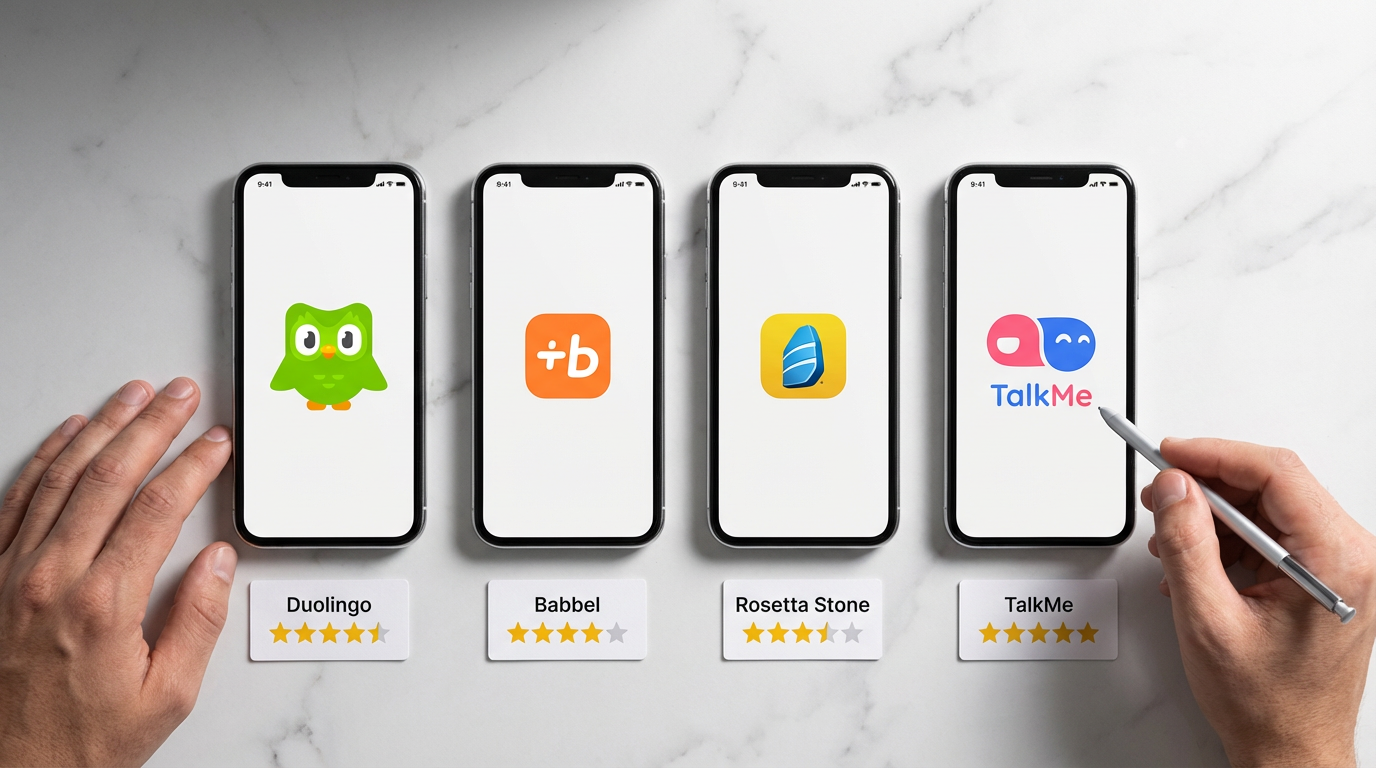
Duolingo's speaking exercises use voice recognition to check your pronunciation. While it's not a full speaking practice tool, the gamified format keeps you consistent.
Busuu
Website: busuu.com
Cost: Free basic; premium ~$10/month
Busuu combines structured lessons with native speaker feedback on your speaking exercises. You record yourself speaking, and real humans review it.
Cake App
Website: mycake.app
Cost: Free
Uses real YouTube videos to teach English through shadowing — a powerful technique where you mimic native speakers in real time. Excellent for improving natural rhythm and intonation.
YouGlish
Website: youglish.com
Cost: Free
Type any word or phrase and YouGlish shows you dozens of YouTube clips of native speakers using it in context. Incredible for learning how words really sound in natural speech.
🎙️ Shadowing & Pronunciation Resources
Shadowing is one of the most effective speaking practice methods — you listen to native audio and repeat it immediately, mimicking the rhythm, stress, and intonation.
Speechling
Website: speechling.com
Cost: Free (limited sessions); paid plan available
Record yourself speaking, and a human coach gives you feedback. Simple, effective, and surprisingly affordable.
Forvo
Website: forvo.com
Cost: Free
A massive pronunciation database with over 4 million words recorded by native speakers in 300+ languages. Look up any word and hear how it's actually pronounced.
Pronunciation Coach (Google)
How to access: Search "how to pronounce [word]" on Google
Cost: Free
Google's built-in pronunciation tool lets you see the phonetic spelling and hear the correct pronunciation. You can even record yourself and compare.
English Accent Coach
Website: englishaccentcoach.com
Cost: Free
Focused on helping non-native speakers reduce accents and improve clarity. Useful pronunciation guides with audio examples.
💬 Conversation Practice Communities
Reddit: r/language_exchange
Website: reddit.com/r/language_exchange
Cost: Free
Post your language exchange request and find partners willing to practice via Discord, Zoom, or WhatsApp. Very active community.
Discord Language Learning Servers
Search for servers like:
Language Learning (one of the largest)
English Practice Server
The Language Café
These are free communities where you can jump into voice channels and practice speaking in real time.
Meetup
Website: meetup.com
Cost: Free to join events (some events charge a small fee)
Search "English conversation" or "language exchange" in your city. Many cities have weekly English speaking clubs at cafés.
Toastmasters International
Website: toastmasters.org
Cost: ~$6/month
If you want to take your English to a professional level — presentations, public speaking, debate — Toastmasters is unmatched. Most meetings are now available online.
📺 Content-Based Speaking Practice
Improving your speaking isn't only about talking. The more you consume high-quality English content, the more naturally you'll absorb vocabulary, sentence structure, and rhythm.
TED Talks
Website: ted.com
Cost: Free
Choose a talk on a topic you love, watch it, then shadow the speaker. TED has transcripts and subtitles in dozens of languages.
BBC Learning English (Speaking)
Website: bbc.co.uk/learningenglish
Cost: Free
BBC offers dedicated pronunciation and speaking lessons for all levels. The "Pronunciation Tips" section alone is worth bookmarking.
CNN 10 / VOA Learning English
Website: cnn.com/cnn10 / learningenglish.voanews.com
Cost: Free
Designed for English learners. Slower speech, clear pronunciation, real-world topics.
EnglishCentral
Website: englishcentral.com
Cost: Free basic plan
Watch videos, read transcripts, and record yourself speaking the lines. The platform uses voice AI to score your pronunciation.
🧠 Study Methods to Maximize Your Speaking Practice
Resources are only as good as the habits around them. Here's how to get the most out of what's above:
The Shadowing Method
Choose native speaker audio (TED Talk, podcast, YouTube video)
Listen to a 30-second clip without pausing
Replay and shadow — speak at the same time as the speaker
Record yourself and compare
Doing this 10 minutes a day will improve your rhythm and intonation faster than any grammar exercise.
The 3-Day Speaking Challenge
Pick one topic (describe your morning routine, talk about a movie you liked). On Day 1, speak for 1 minute. On Day 2, speak for 2 minutes. On Day 3, record yourself and review.
This forces you to expand your vocabulary and think on your feet.
The Language Immersion Trick
Switch your phone and computer language to English. Change your music playlist to English songs. Put English podcasts on during your commute.
The more English surrounds you, the more naturally it will come when you open your mouth.
Choosing the Right Resources for Your Level
Summary: Your 2026 English Speaking Toolkit
Start Speaking Today
The most important step isn't finding the perfect app. It's opening your mouth and making a sound — even if it's imperfect, even if it feels uncomfortable.
Fluency is built one conversation at a time.
If you're looking for more free language learning resources, tips, and strategies, visit our blog at blog.talkme.ai — we publish weekly guides to help you learn faster and speak more confidently.
And if you want to jump straight into AI-powered speaking practice with lifelike tutors, try TalkMe for free at talkme.ai.
Frequently Asked Questions
What's the best free app to practice speaking English?
There are several great options. HelloTalk and Tandem connect you with native speakers for language exchange — they're free and effective. TalkMe offers AI-powered conversation practice with lifelike tutors, and it's free to start. ELSA Speak is excellent for pronunciation feedback. The "best" one depends on what you need: real human interaction, AI availability, or pronunciation correction.
How can I practice English speaking alone at home?
Shadowing is the most effective solo technique — listen to native speaker audio and repeat out loud simultaneously. You can also use AI conversation tools like TalkMe, which simulate real dialogue and give you instant feedback on your speaking. Recording yourself and listening back is another simple but powerful method.
Why can I read English well but struggle to speak?
This is incredibly common. Reading and writing are "receptive" skills — you have time to think. Speaking is "productive" — you need to produce language in real time. The gap is usually caused by lack of output practice. The solution is simple: speak more. Even 10 minutes of daily conversation practice (with a person or an AI tutor) can make a significant difference within weeks.
How long does it take to become fluent in English speaking?
It depends on your starting level and daily practice time. A complete beginner practicing 30 minutes daily can reach conversational comfort in about 6-12 months. An intermediate learner can reach upper-intermediate fluency in 3-6 months with consistent speaking practice. The key factor isn't total hours — it's how much of your practice involves actually speaking rather than just studying.
Is it worth paying for an English speaking app?
It depends on your goals and budget. Free tools like HelloTalk and TalkMe's basic plan cover a lot of ground. Paid tutors on italki ($5-30/hr) are valuable for targeted feedback. The most cost-effective approach for most learners is to use free resources for daily practice and invest in a tutor occasionally for correction and guidance.
What topics should I practice speaking about?
Start with your daily life — describe your morning routine, your job, your hobbies. Then move to opinion topics (movies, news, food you like). For intermediate learners, practice scenarios like job interviews, travel situations, and debates. The best practice material is whatever feels personally relevant to you — you'll speak more naturally when you're actually interested in what you're saying.
Found this guide helpful? Share it with a friend who's learning English — it might be exactly what they need.

Comments
No comments yet.
Leave a Comment