

So you want to speak English fluently. You've studied grammar. You've watched Netflix. You've even tried memorizing vocabulary lists. But the moment you open your mouth to actually speak—your mind goes blank, your words come out wrong, and the whole thing feels embarrassing.
Sound familiar? You're not alone.
Here's the truth: speaking English fluently requires speaking practice, not just studying. And in 2026, there are more resources than ever to help you practice speaking—from AI-powered conversation partners to global language exchange communities.
In this guide, we've rounded up 15 of the best English speaking practice resources, organized by learning stage and goal. Whether you're a complete beginner or someone aiming for near-native fluency, there's something here for you.
Why Most People Struggle to Speak English (Even After Years of Study)
Before we dive into the resources, let's address the real problem.
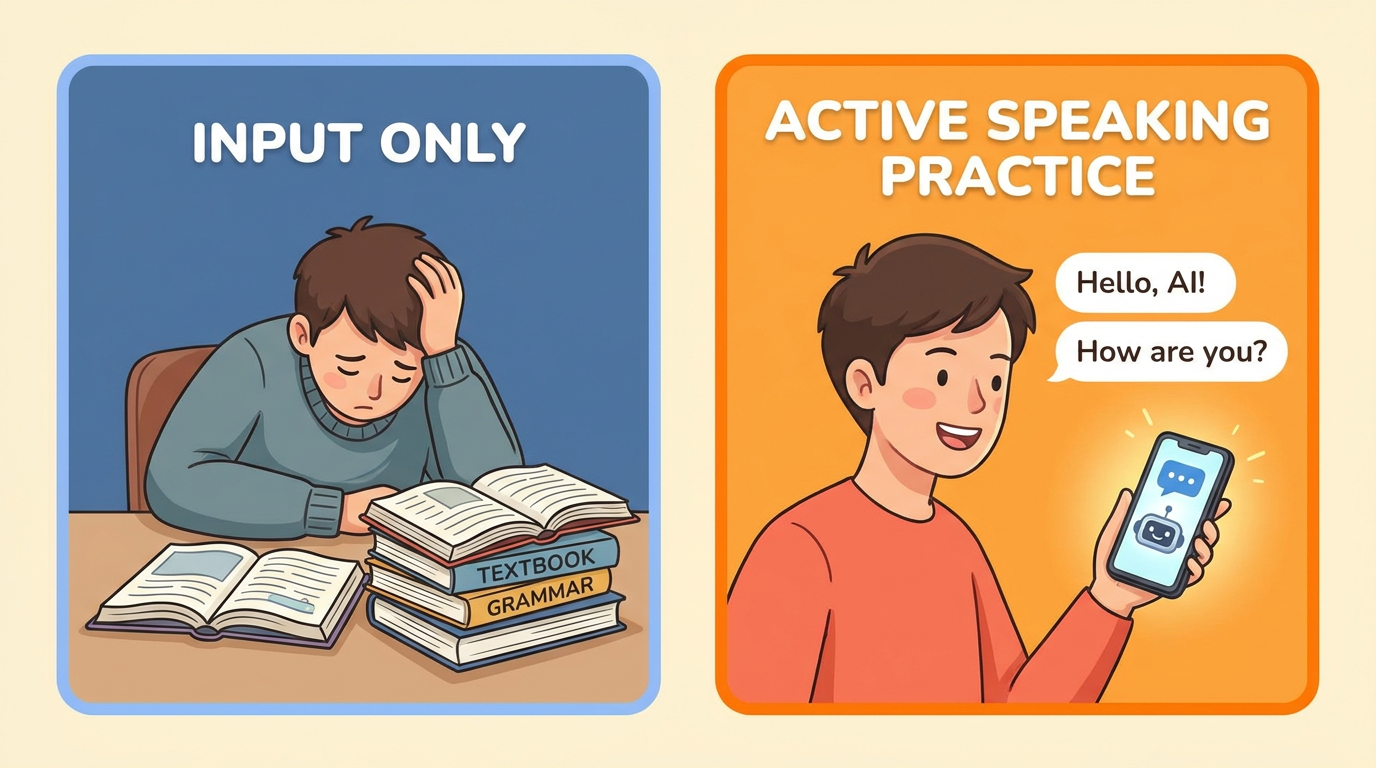
Most language learners fall into what experts call the "input trap"—they spend 95% of their time reading, listening, and studying, but almost no time actually producing language. Speaking is a skill that requires active output practice, and you can't build it by passive consumption alone.
The good news? Speaking practice has never been more accessible. You don't need to move to an English-speaking country or pay for expensive one-on-one tutors every day. With the right tools, you can practice speaking English effectively from anywhere in the world.
Tier 1: AI-Powered Speaking Practice Apps
These tools are ideal for daily practice—available 24/7, no scheduling required, no judgment.
1. TalkMe — AI Conversation Partner with Real-Time Feedback
Best for: Daily speaking practice, pronunciation correction, confidence building
TalkMe is one of the most advanced AI speaking practice tools available in 2026. Unlike apps that just play pre-recorded dialogues, TalkMe creates genuine two-way conversations powered by AI. You speak, the AI responds naturally, and you get real-time feedback on your pronunciation, grammar, and fluency.
What makes TalkMe stand out:
Scenario-based conversations: Practice for job interviews, travel, casual conversation, business meetings, and more
Pronunciation analysis: The AI identifies exactly which sounds you're mispronouncing and shows you how to fix them
Adaptive difficulty: The AI adjusts to your level—whether you're a beginner or advanced
No awkward silences: Unlike human tutors, TalkMe is available anytime—midnight practice sessions are totally fine
Progress tracking: See measurable improvement in your fluency metrics over time
If you're serious about speaking English fluently, TalkMe should be your daily training ground. Many learners report breaking through their speaking plateau after just 2–3 weeks of consistent daily practice. You can also explore more learning strategies and resources on the TalkMe Blog.
How to use TalkMe effectively:
Practice for 15–20 minutes every day (consistency beats long sessions)
Focus on one scenario per week (e.g., Week 1: Introductions, Week 2: Ordering at a restaurant)
Review your pronunciation feedback after each session and practice problem sounds
2. ELSA Speak — AI Pronunciation Coach
Best for: Pronunciation improvement, accent reduction
ELSA (English Language Speech Assistant) is a specialized AI app focused entirely on pronunciation. Using speech recognition technology, ELSA listens to you speak and gives you detailed feedback on individual sounds, stress patterns, and intonation.
If your goal is to reduce your accent or sound more like a native speaker, ELSA is an excellent complement to your speaking practice routine. Many learners use ELSA alongside TalkMe: ELSA to drill specific sounds, TalkMe to practice full conversations.
3. Speak — AI-Powered Speaking App
Best for: Structured lessons with speaking components
Speak (the app) combines AI conversation practice with structured lesson content. It's particularly popular among learners who prefer a more guided curriculum alongside free conversation practice. The AI conversation feature allows you to practice speaking on specific topics and receive instant feedback.
Tier 2: Human Conversation Partners
AI tools are excellent for daily practice, but there's irreplaceable value in conversing with real humans. These platforms connect you with native speakers and fellow learners.
4. italki — Find a Language Tutor or Exchange Partner
Best for: One-on-one lessons with professional tutors or community tutors
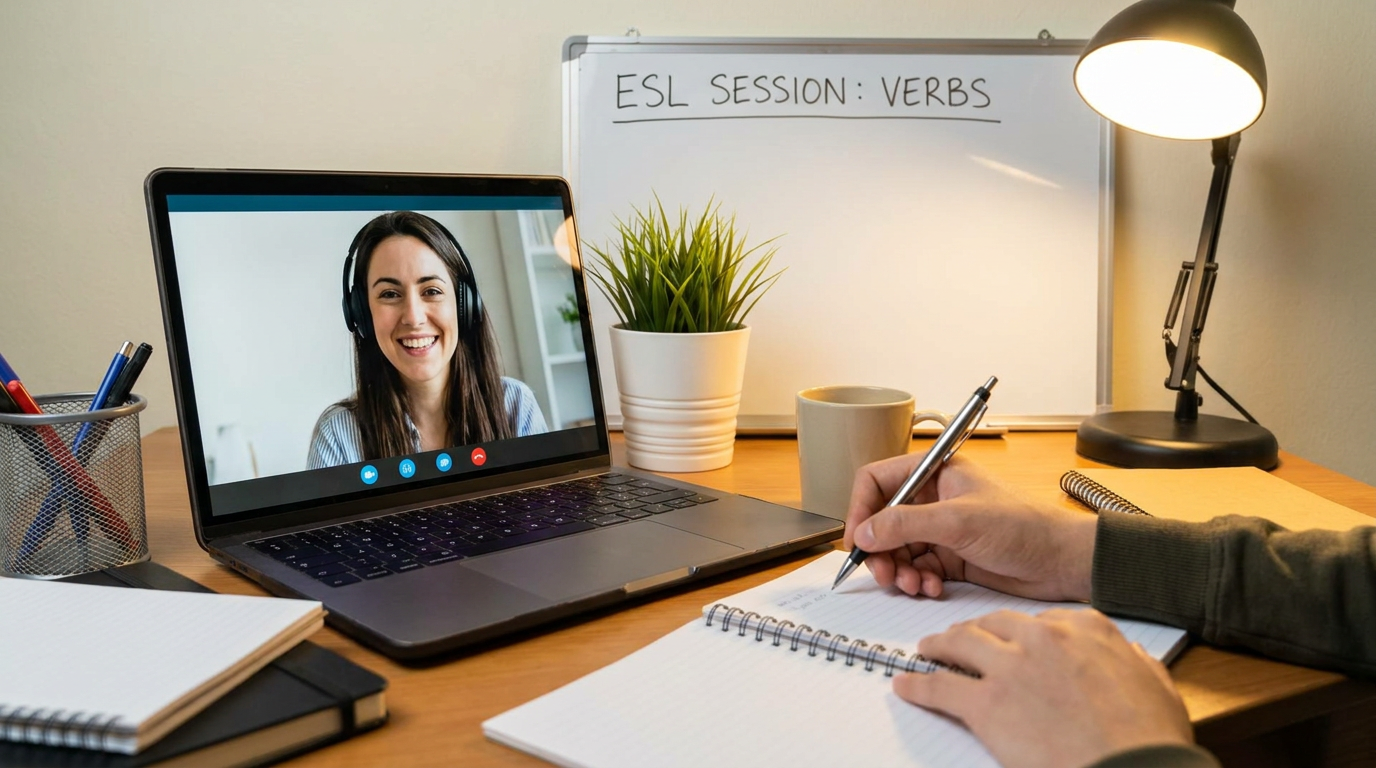
italki is the world's largest online language tutoring platform. You can book lessons with professional English teachers, or find community tutors for more affordable, conversational practice. For serious learners, scheduling 2–3 sessions per week with an italki tutor alongside daily AI practice on TalkMe creates a powerful combination.
Pro tip: Use your TalkMe sessions to prepare for your italki lessons—come with specific questions, phrases, or scenarios you want to practice. This way, you get maximum value from your human tutoring time.
5. Tandem — Language Exchange with Native Speakers
Best for: Free language exchange, cultural conversation
Tandem connects you with native English speakers who are learning your language. You practice English with them, and in return, you help them practice your native language. It's free, it's authentic, and it exposes you to real conversational English as it's actually spoken.
The key to Tandem success? Consistency and commitment. Treat your exchange partners with the same respect as a paid tutor—show up on time, come prepared, and be patient.
6. Speaky — Global Language Exchange Community
Best for: Meeting multiple language partners, text + voice practice
Similar to Tandem, Speaky is a language exchange platform with a large active community. What sets it apart is the ability to easily connect with many different partners, giving you exposure to different accents, speaking styles, and topics.
7. Cambly — On-Demand Native English Tutors
Best for: Instant access to native English speakers, business English
Cambly lets you connect instantly with native English tutors—no booking required. Just open the app and you're in a conversation within seconds. This is particularly valuable for learners who want spontaneous, unstructured conversation practice.
Tier 3: Structured Learning Resources with Speaking Components
These resources combine speaking practice with structured learning content.
8. BBC Learning English — Free, High-Quality Content
Best for: British English, pronunciation, grammar in context
The BBC Learning English website and YouTube channel offer an enormous library of free learning materials, many featuring speaking and pronunciation practice. Their "Sounds Right" pronunciation chart, "The Pronunciation Workshop," and various dialogue series are excellent resources.
Practice tip: Watch a BBC Learning English video, pause it, and try to repeat each sentence out loud, mimicking the speaker's pronunciation, rhythm, and intonation. This technique—called shadowing—is one of the most effective ways to improve spoken English.
9. VOA Learning English — American English for All Levels
Best for: American English, news-based learning
Voice of America's Learning English service presents news and feature stories at slower speeds with simpler vocabulary. This is perfect for intermediate learners who want to build listening and speaking skills simultaneously. Watch a story, then practice retelling it out loud—a technique called "output rehearsal."
10. YouTube — The World's Largest Free English Learning Library
Best for: Accent training, natural conversation models, speaking techniques
YouTube is an underrated speaking practice resource. Here's how to use it effectively:
Rachel's English: Arguably the best YouTube channel for American English pronunciation
English with Lucy: Natural British English with clear explanations
Speak English with Vanessa: Conversational English in real-life situations
Pronunciation with Emma: Detailed pronunciation breakdowns for non-native speakers
The secret is active watching: pause the video, repeat sentences out loud, record yourself, and compare your pronunciation to the speaker's.

Tier 4: Practice Methods You Can Do Anywhere
No app required—these techniques can be practiced anytime, anywhere.
11. The Shadowing Technique
Shadowing means repeating what a native speaker says—simultaneously or with a slight delay—mimicking their exact pronunciation, rhythm, and intonation. It's one of the most research-backed methods for improving spoken language.
How to shadow effectively:
Choose audio material slightly above your current level (movies, podcasts, YouTube)
Listen once without stopping to understand the meaning
Play it again, repeating everything you hear out loud—don't stop to translate
Focus on sounding like the speaker, not just understanding the words
12. Self-Talk Practice (Thinking Out Loud in English)
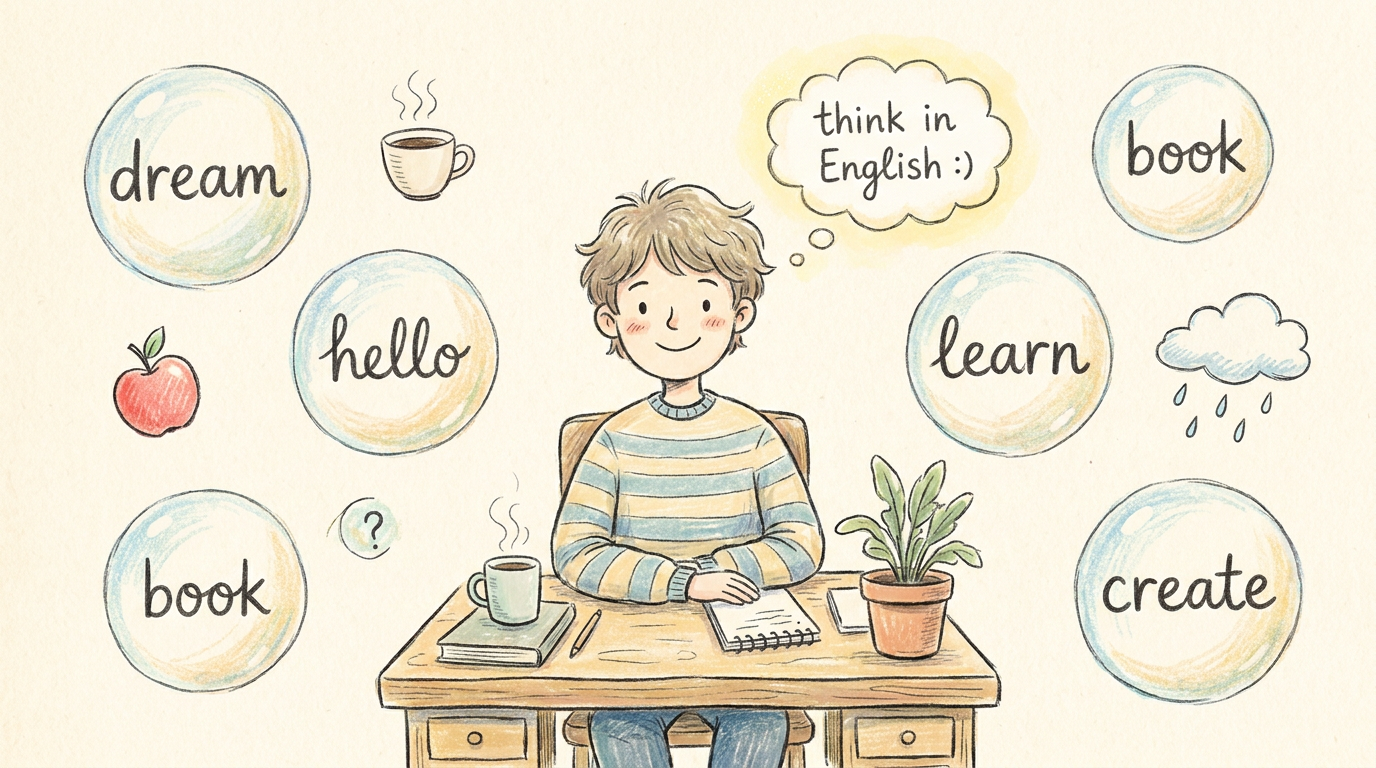
One of the most underrated speaking practice techniques: talk to yourself in English. Narrate your day, describe what you see, think through problems aloud in English. This builds the mental habit of "thinking in English" rather than translating from your native language.
Start small: describe what you're doing as you do it. "I'm making coffee. I'm opening the fridge. The milk is cold." Gradually, move to more complex self-talk: explaining your opinions, recalling your day, planning future activities.
13. Tongue Twisters for Pronunciation Drills
Tongue twisters are a fun way to drill difficult English sounds. They force you to focus on precise articulation and are excellent warm-up exercises before speaking practice sessions.
Classic examples:
For the /θ/ sound: "The thirty-three thieves thought that they thrilled the throne throughout Thursday."
For /s/ vs /ʃ/: "She sells seashells by the seashore."
For /p/ and /b/: "Peter Piper picked a peck of pickled peppers."
14. Conversation Journals and Voice Diaries
Keep a "speaking journal"—record yourself speaking in English for 3–5 minutes each day. Talk about your day, your opinions, interesting things you learned. After a week, listen back to your older recordings. You'll often be surprised by how much your fluency has improved.
This technique builds three crucial skills simultaneously: vocabulary recall, real-time sentence construction, and confidence under self-monitoring.
Tier 5: Community and Immersion Resources
15. Reddit Language Learning Communities
Reddit communities like r/languagelearning, r/EnglishLearning, and r/italki are packed with advice, resources, and fellow learners. These communities host regular speaking challenges, resource recommendations, and motivational threads that can keep you accountable on your learning journey.
How to Build a Complete English Speaking Practice Routine
Having great resources is only half the battle—the other half is building a consistent practice routine. Here's a simple framework:
Daily (15–20 minutes):
AI conversation practice on TalkMe
Review pronunciation feedback from the session
3x per week:
Shadowing exercise with YouTube or podcast audio (10 minutes)
Self-talk practice or voice diary recording (5 minutes)
Weekly:
One session with a language exchange partner or tutor (30–60 minutes)
Watch one English video actively (pause and repeat technique)
Monthly:
Review your voice diary recordings to track progress
Try one new accent or speaking challenge
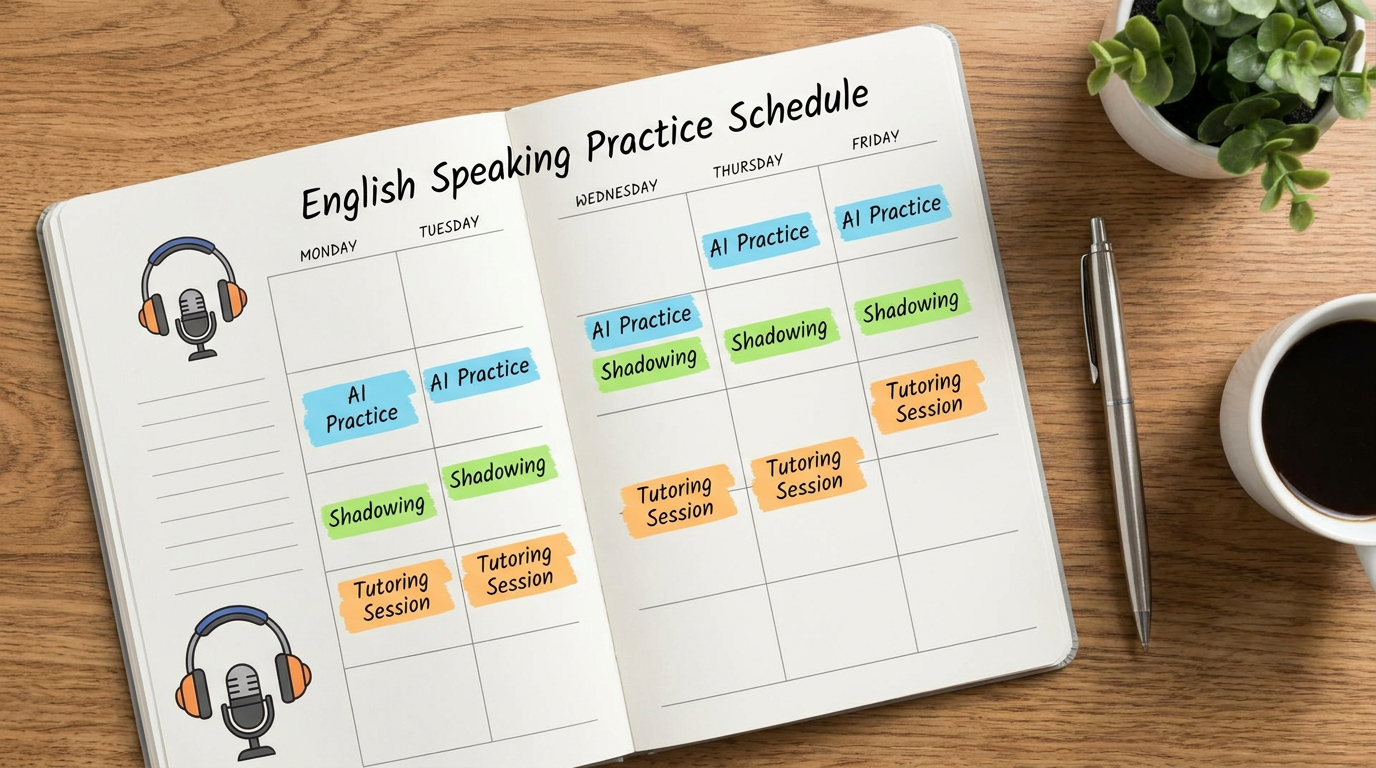
This routine gives you speaking exposure from multiple angles: AI conversation for quantity and feedback, human interaction for authenticity, shadowing for accent and rhythm, and self-monitoring for metacognitive awareness.
The Science Behind Speaking Practice: Why Frequency Beats Intensity
Research in second language acquisition consistently shows that distributed practice (short, frequent sessions) outperforms massed practice (long, infrequent sessions). In other words, 15 minutes every day is more effective than 3 hours on weekends.
This is why daily AI conversation practice on platforms like TalkMe is so powerful: it delivers consistent daily speaking exposure without the scheduling overhead of booking human tutors every day.
The key mechanism is automaticity—the neurological process of making speech patterns automatic. Every time you speak English, you're strengthening neural pathways. With daily practice, the process of forming English sentences becomes faster and more natural, until eventually you stop "translating" and start "thinking" in English.
Common Mistakes to Avoid in Speaking Practice
❌ Only practicing when you feel "ready"
Waiting until you feel confident enough to speak will keep you waiting forever. Speak now, with the level you have.
❌ Avoiding mistakes at all costs
Mistakes are data, not failures. Every error is a learning signal. Embrace them.
❌ Studying instead of speaking
If you're spending more time studying grammar than actually speaking, you're not doing speaking practice—you're doing grammar study.
❌ Practicing alone without any feedback
Self-practice is valuable, but without feedback, bad habits can become ingrained. Use AI tools like TalkMe to get correction and feedback on your output.
❌ Inconsistency
Missing one day isn't a problem. Missing a week will set you back. Missing a month means starting over. Build the daily habit first.
Final Thoughts: Start Speaking Today
The single most important thing you can do to improve your English speaking? Start speaking—right now, today, with the level you have.
You don't need to be perfect. You don't need perfect resources. You just need to open your mouth consistently and practice.
Use the resources in this guide to build a speaking practice habit that works for you. Mix AI tools like TalkMe for daily practice with human partners for authentic conversation. Use structured resources for skill-building and community resources for motivation.
And remember: every native English speaker you've ever admired was once a beginner who decided to keep practicing despite the discomfort.
Your fluency journey starts with your next conversation.
Looking for more language learning strategies, speaking tips, and AI tool recommendations? Visit blog.talkme.ai for weekly guides, methods, and stories from learners around the world.


Comments
No comments yet.
Leave a Comment