

So you've been studying a language for months — maybe years — and yet the moment someone speaks to you in that language, your mouth goes dry and your brain goes blank. Sound familiar?
You're not alone. Speaking is consistently rated as the hardest skill to develop in any language, and there's a specific reason for that: most people study a language but never actually practice speaking it.
This guide is going to change that. Whether you're learning English, Korean, Spanish, French, or any other language, the principles for improving speaking skills are the same. Let's get into it.
Why Speaking Feels So Hard (And Why It's Not Your Fault)
Before we dive into strategies, let's diagnose the real problem.
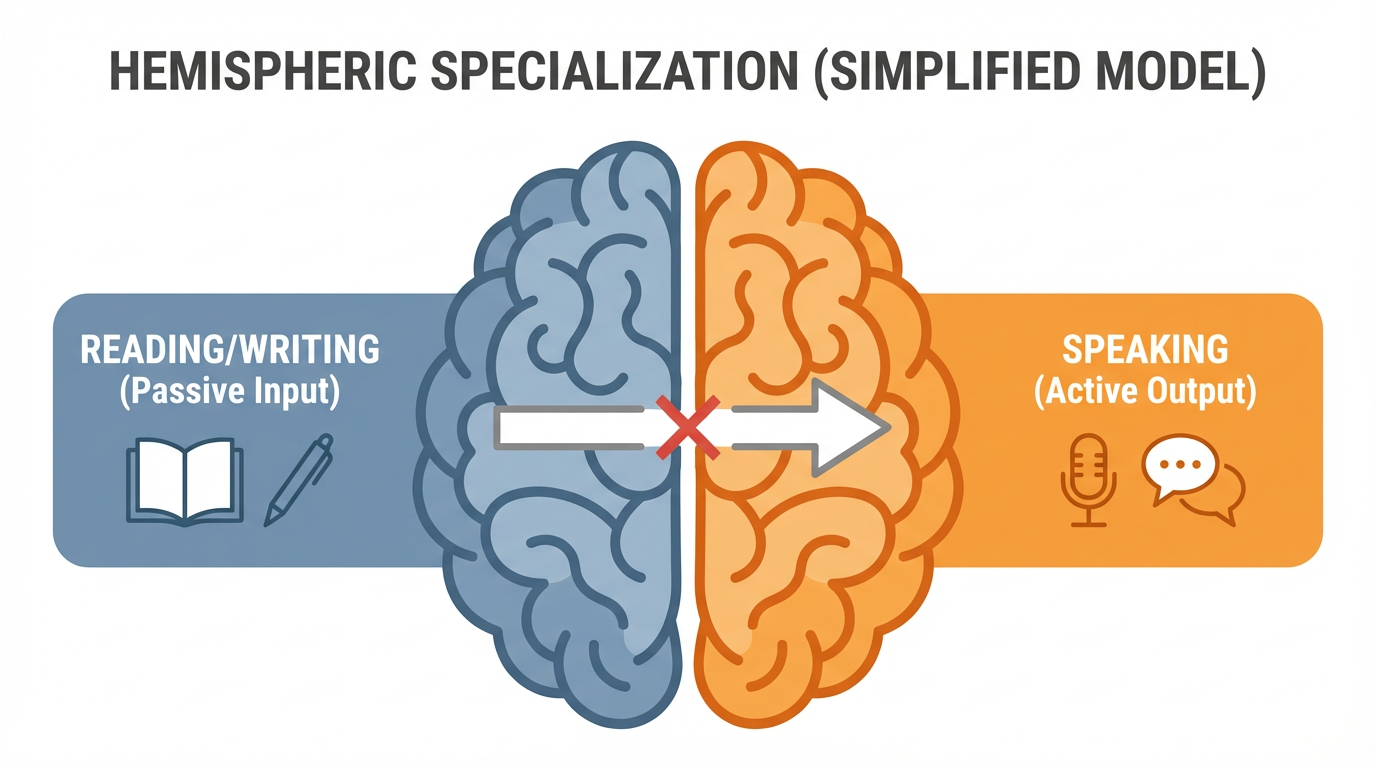
Most traditional language learning — textbooks, apps, grammar drills — trains your recognition skills. You get better at reading and understanding, but you don't build the production circuits your brain needs for spontaneous speech.
Speaking in real time requires:
Instant vocabulary retrieval (not just recognition)
Real-time grammar processing (you can't pause and think)
Pronunciation and rhythm (muscle memory, not knowledge)
Listening + responding simultaneously (cognitive multitasking)
None of these develop from passive study. They only develop from actual speaking practice — which is precisely why most learners plateau and stay stuck.
The 5 Core Principles of Improving Speaking Skills
1. Volume Over Perfection
The single biggest barrier to speaking improvement is the fear of making mistakes. Students wait until they're "ready," and that moment never comes.
The truth: Fluency is built on output volume, not accuracy rate. Every mistake you make and correct is worth a hundred perfect sentences you never said.
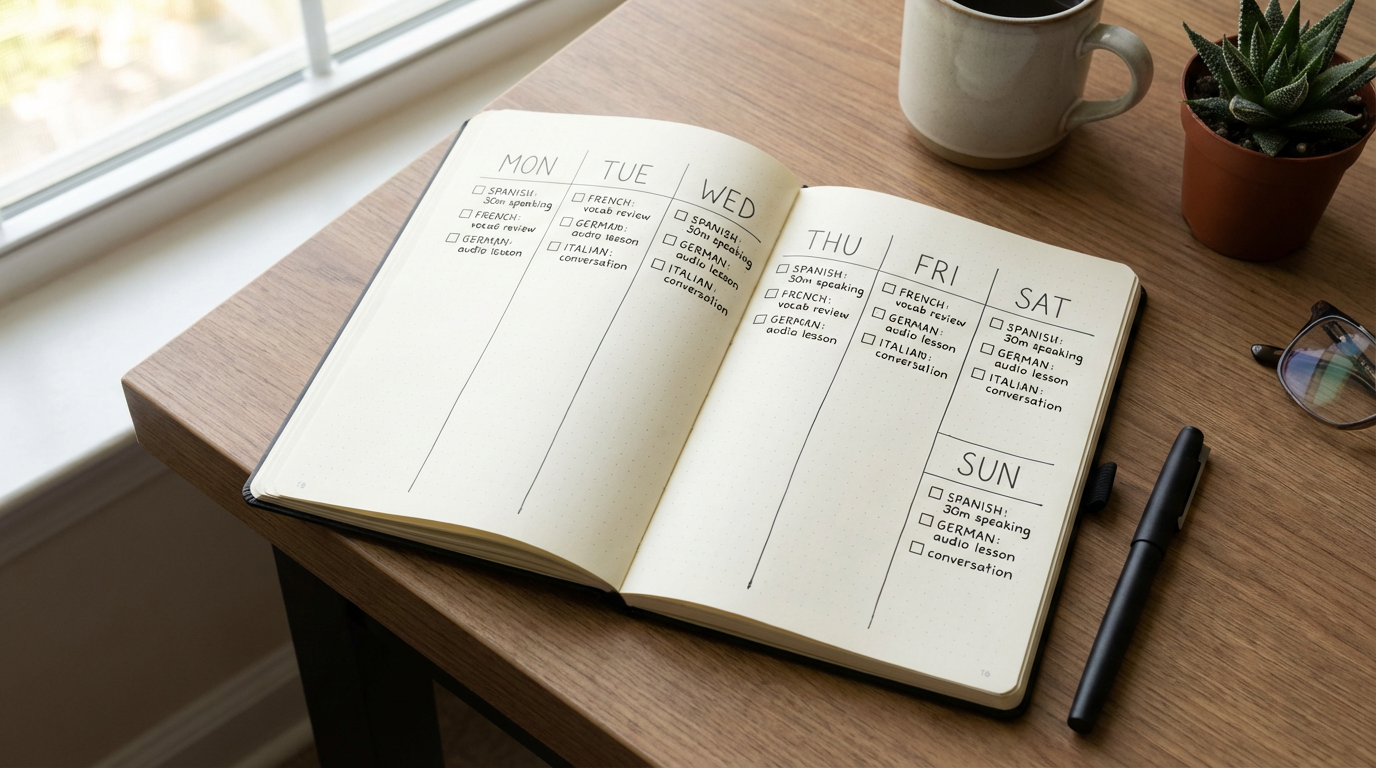
Set a daily speaking quota — even 5 minutes of actual speaking — and stick to it. Speaking practice that actually happens beats a perfect study plan that doesn't.
2. Comprehensible Input First, Output Second
Speaking doesn't happen in a vacuum. Your vocabulary bank, sentence patterns, and intuitive grammar all come from listening and reading. If you feel like you "have nothing to say," it's often because your input hasn't been rich enough.
A good ratio to aim for, especially at beginner-intermediate level: 3 parts input for every 1 part output. Listen to podcasts, watch native content, read articles in your target language — then talk about what you absorbed.
3. Shadowing: The Closest Thing to a Speaking Shortcut
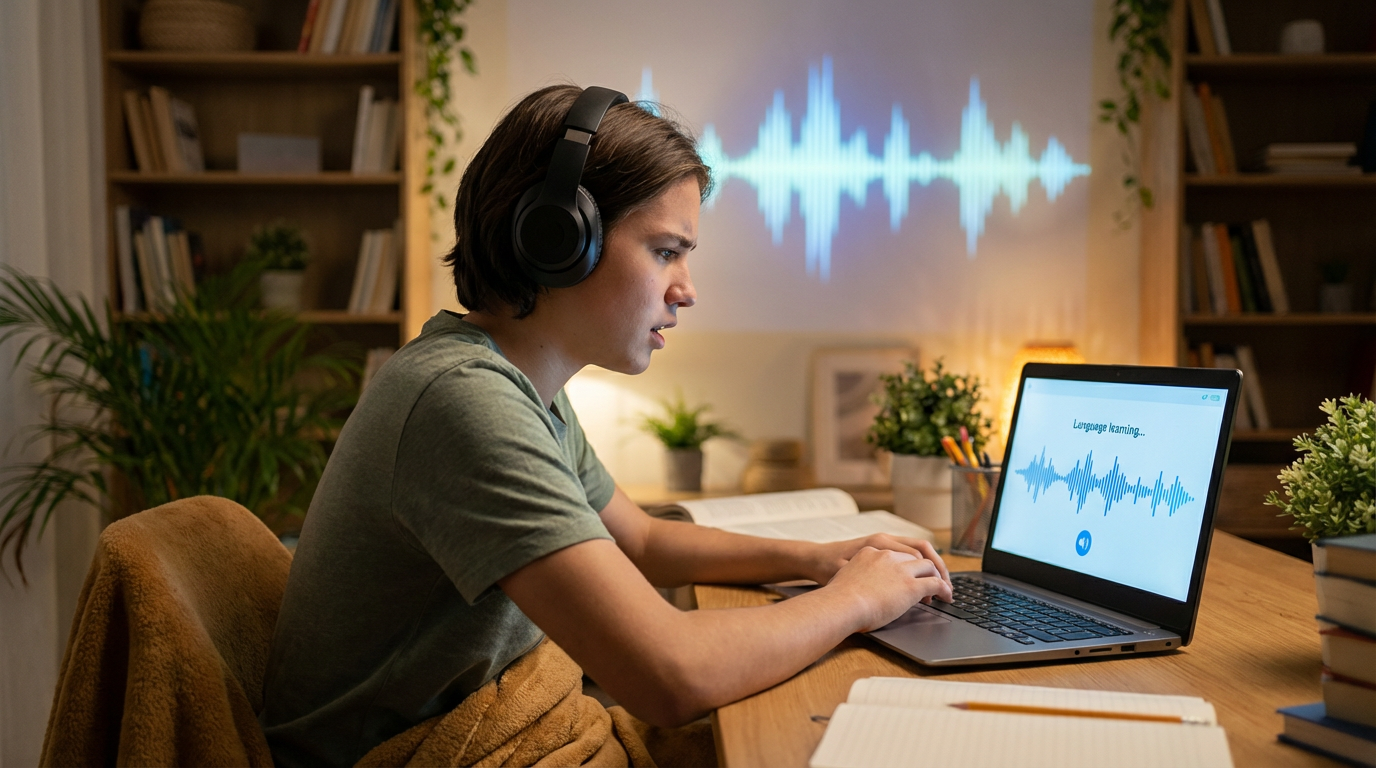
Shadowing is the practice of listening to a native speaker and repeating what they say in real time, mimicking their rhythm, intonation, and pace. It's used by interpreters in training and it works remarkably well for regular learners too.
How to shadow:
Choose audio with a transcript (podcast, YouTube video, audiobook)
Listen to a sentence
Immediately repeat it out loud, copying the speaker's delivery as closely as possible
Focus on how it sounds, not just the words
Even 10 minutes of daily shadowing will transform your pronunciation and speaking confidence within weeks.
4. Use the Language, Don't Just Study It
Here's a rule to live by: every hour you spend talking beats three hours of grammar drills.
Concrete ways to use the language:
Find a conversation partner (language exchange apps, online tutors)
Talk to yourself — narrate your day, describe what you see, think out loud
Join speaking clubs (Toastmasters has international chapters, many universities have language clubs)
Comment on YouTube videos or forums in your target language (writing still counts!)
Use AI conversation tools for on-demand practice anytime
The goal is to make speaking a daily habit, not an occasional event.
5. Build a Feedback Loop
Speaking without feedback is like practicing golf with your eyes closed. You might be reinforcing bad habits without knowing it.
Get feedback from:
Native speakers (language exchange partners, teachers, tutors)
AI conversation tools that flag pronunciation or grammar errors
Recording yourself and listening back (uncomfortable but incredibly effective)
When you get corrected, don't just acknowledge it — repeat the correct form three times aloud immediately. That's how you actually rewire the pattern.
A Practical Daily Speaking Routine (15–30 Minutes)
You don't need hours every day. Here's a minimalist routine that actually works:
Total: 20–30 minutes of active speaking per day will produce noticeable results within 4–6 weeks.
For beginners: Start with just the monologue portion. Even broken, imperfect sentences said out loud count. The goal is movement, not mastery.
For intermediate learners: Focus on conversation practice. Push yourself to express complex ideas, tell stories, and ask follow-up questions.
For advanced learners: Work on prosody — rhythm, stress, intonation. Record yourself, compare to native speakers, and target specific weak points.
5 Techniques Specifically for Improving Conversational Fluency
1. The "1-Minute Monologue" Drill
Pick a random topic (use a card, app, or dice app to randomize) and speak about it for exactly one minute without stopping. Don't worry about mistakes. Just keep talking.
This trains your brain to produce language under pressure — exactly the condition you face in real conversations.
Topics to start with:
Describe your morning routine
Talk about your favorite meal and why you love it
Explain how to get to the nearest supermarket from your home
Talk about a movie you recently watched
2. Storytelling Practice
Narratives force you to use past tenses, logical connectors, descriptive language, and emotional vocabulary all at once. They're one of the richest speaking exercises available.
Start with a 3-part structure: What happened → What I felt → What I learned. Tell one small story per day.
3. The "Repeat and Expand" Technique
When you learn a new phrase, don't just memorize it — build 5 sentences from it immediately:
Example phrase: "I'm not sure, but I think…"
I'm not sure, but I think the meeting starts at 3.
I'm not sure, but I think she left already.
I'm not sure, but I think that's the wrong answer.
I'm not sure, but I think we need more time.
I'm not sure, but I think he's the best teacher I've had.
This creates flexible, usable structures instead of frozen memorized lines.
4. Speak at the Speed of Understanding
Many learners try to speak as fast as native speakers — and end up garbled and misunderstood. Speed is a byproduct of fluency, not a prerequisite.
Focus on speaking clearly and naturally, letting speed develop organically. Listeners respect clarity far more than speed.
5. Learn "Filler" Language
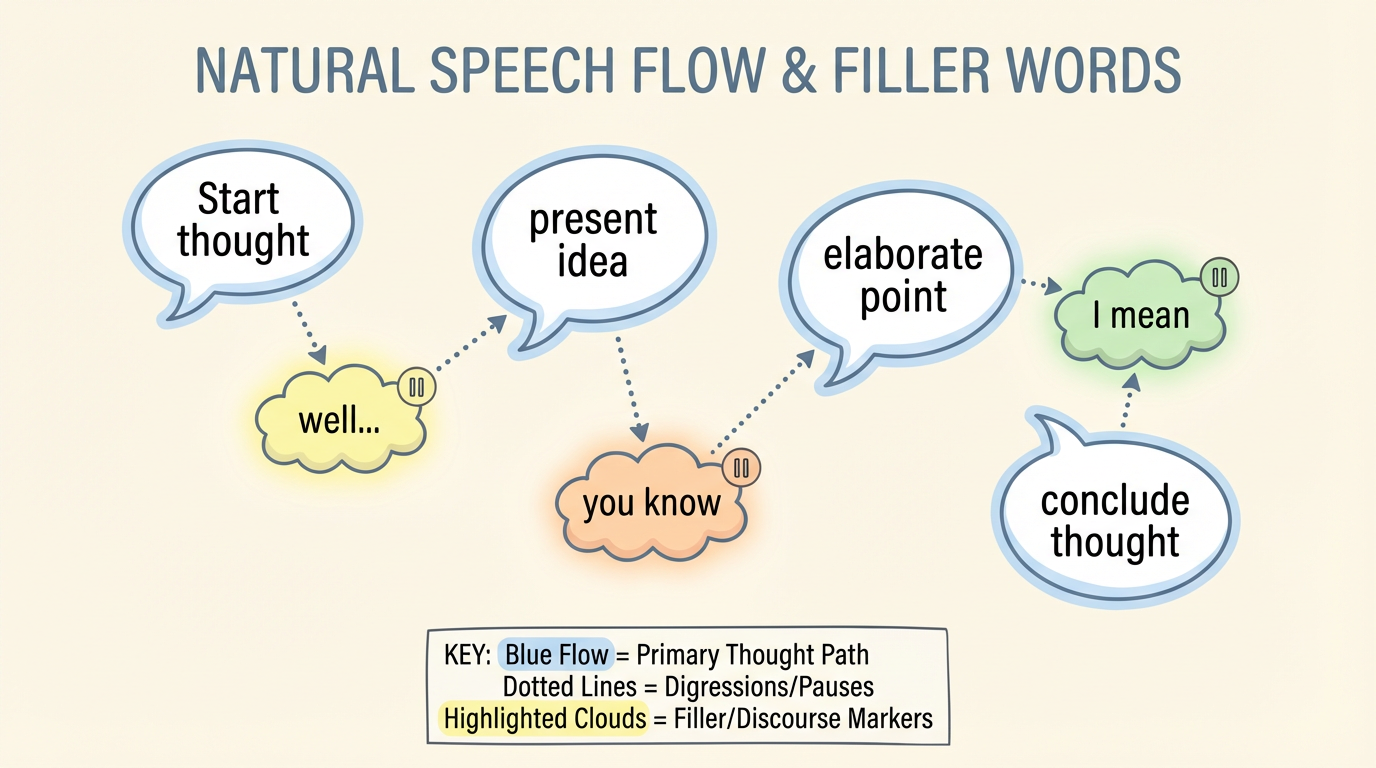
Native speakers use filler phrases constantly: "you know," "I mean," "so basically," "well…" These aren't mistakes — they're social glue that keeps conversation flowing while you think.
Learning the natural fillers and hesitation markers of your target language makes you sound more fluent and buys you time to construct sentences.
The Role of AI in Building Speaking Skills
AI-powered conversation tools have fundamentally changed what's accessible to language learners. The ability to practice speaking at 2 AM, without judgment, on topics you choose, with instant feedback — that simply didn't exist five years ago.
Tools like TalkMe (available at talkme.ai) are designed specifically for this: realistic AI conversation partners that adapt to your level, correct your mistakes in context, and help you build real conversational confidence. For learners who don't have easy access to native speakers or tutors, it's genuinely a game-changer.
The key is to use AI tools as a complement to — not a replacement for — real human interaction. Use AI for daily drills and low-stakes practice; use human partners for authentic, unpredictable conversation.
How Long Does It Actually Take?
Let's be honest about timelines:
These ranges assume consistent daily practice. Progress accelerates dramatically with immersion — travel, living abroad, or full-day immersion programs.
The most important variable isn't time — it's quality speaking hours. 15 focused minutes beats 2 distracted hours every time.
Common Mistakes That Keep Learners Stuck
❌ Translating in your head before speaking
This is a beginner crutch that must be broken. Start thinking in your target language, even in fragments. Mental translation is the enemy of fluency.
❌ Only practicing what you already know
Growth requires discomfort. Regularly attempt sentences that are slightly beyond your current ability. Mistakes in this zone are the ones that produce the biggest gains.
❌ Treating reading/listening as speaking practice
They're related but separate skills. Input helps, but it can't replace output. You must speak.
❌ Practicing in isolation without feedback
Speaking into a void reinforces both correct and incorrect patterns equally. Find ways to get feedback regularly.
❌ Giving up after a difficult conversation
Hard conversations are the best teacher. If you came away confused or fumbling, you just identified your next growth target.
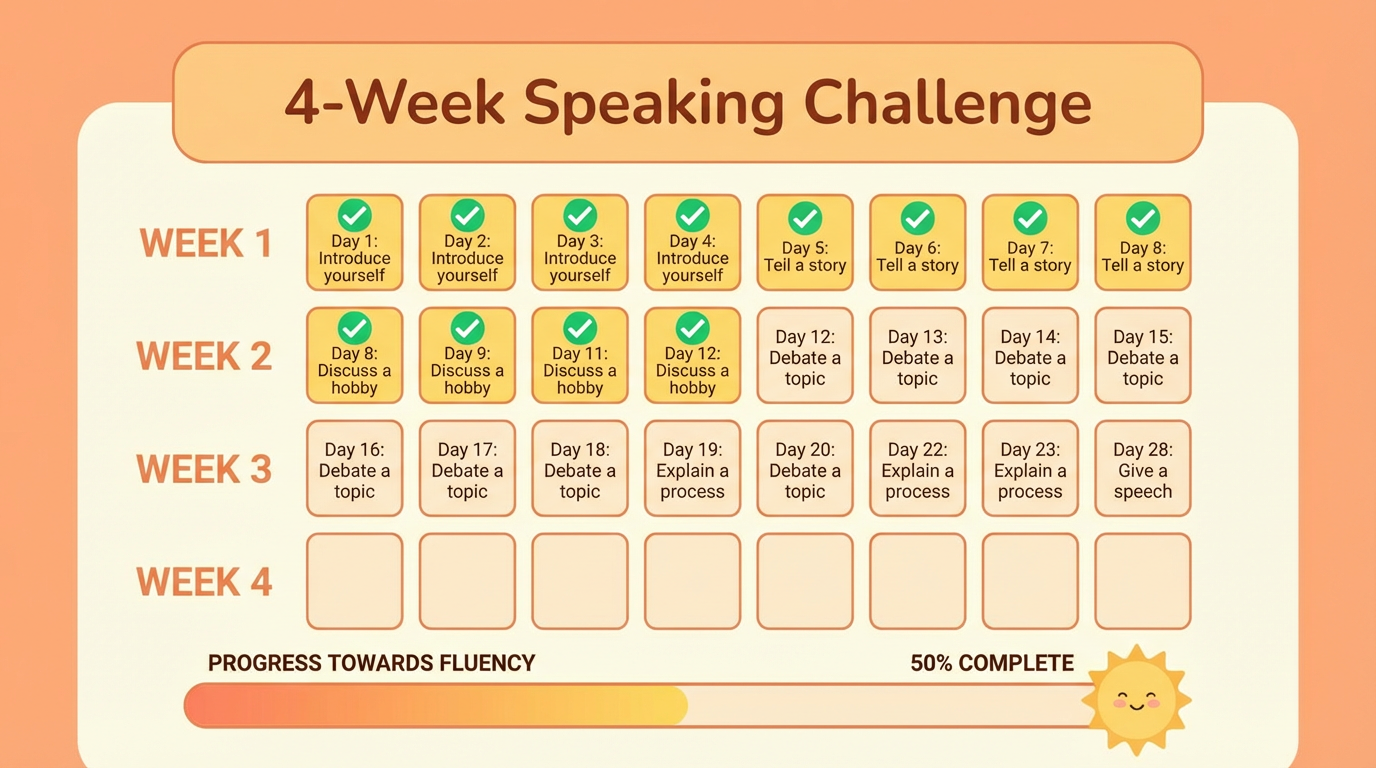
A 4-Week Speaking Jumpstart Plan
Week 1: Foundation
5 minutes of shadowing daily (choose content just below your current level)
5-minute daily monologue (describe your day)
Record yourself once at the end of the week; listen back
Week 2: Expansion
Increase shadowing to 10 minutes
Start "1-minute monologue" drills with random topics
Join at least one language exchange conversation (even 15 minutes counts)
Week 3: Conversation
Begin regular conversation practice (partner, AI tool, or tutor)
Apply "Repeat and Expand" to 5 new phrases per day
Focus on using filler language naturally
Week 4: Review and Push
Review recording from Week 1 — compare to now
Attempt one conversation topic you've been avoiding (too complex, too unfamiliar)
Set your ongoing speaking practice routine going forward
By Week 4, most learners notice a significant difference in fluency and confidence. That's not magic — it's 28 days of consistent practice paying off.
Resources to Accelerate Your Progress
For finding conversation partners:
Tandem
HelloTalk
iTalki (paid tutors + community)
For structured speaking practice:
TalkMe (talkme.ai) — AI conversation partner, available 24/7
Pimsleur — audio-first, great for speaking rhythm
Speechling — human feedback on recorded speech
For self-study content:
YouTube channels in your target language (start with subtitles, gradually remove them)
Podcasts designed for learners (e.g., Coffee Break Languages series)
TalkMe's blog at blog.talkme.ai for more in-depth guides on specific languages and speaking strategies
Frequently Asked Questions
Q: How do I improve speaking skills when I have no one to practice with?
A: Monologue practice (talking to yourself) is more effective than most people realize. AI conversation tools also give you a real conversation partner available anytime. You don't need a human to start building speaking habits.
Q: I freeze up when I need to speak — how do I get over this?
A: The freeze response comes from treating speaking as a performance test. Reframe it as an experiment: every speaking session is data-gathering, not judgment. Mistakes are the goal, not the failure condition.
Q: Should I focus on grammar before speaking?
A: Enough grammar to communicate — yes. Perfect grammar before speaking — no. You'll learn more grammar from speaking (and being corrected) than from any textbook. Don't let grammar study be a reason to delay output.
Q: Is accent reduction important?
A: Being understood is important. Having a native-like accent is optional and, for most learners, not the highest priority. Clear pronunciation beats a perfect accent every time. Once communication is solid, accent work becomes a refinement, not a prerequisite.
Q: How do I stay motivated when progress feels slow?
A: Track output, not proficiency. Count the minutes you practiced, the conversations you had, the sentences you attempted. Progress in speaking is non-linear — there are long flat plateaus followed by sudden leaps. Consistency through the plateaus is what separates learners who make it from those who don't.
Q: What's the fastest way to improve speaking in 30 days?
A: Daily shadowing + daily conversation practice (even 15 minutes) + recording yourself weekly. 30 days of this, done consistently, will produce real, noticeable improvement. No shortcut beats consistent volume.
The Bottom Line
Improving your speaking skills comes down to one core principle: you have to actually speak.
All the grammar guides, vocabulary apps, and language courses in the world can build your foundation — but they cannot substitute for the hours of messy, imperfect, real speaking practice that fluency is built on.
Start small. Start today. Talk about your morning coffee in your target language. Describe what you see outside the window. React to a video clip out loud.
Every sentence you say out loud is a deposit in your fluency bank. The account grows slowly at first — then, one day, it tips and the words just come.
You've got this. Now go say something.
Want more speaking strategies and language learning guides? Explore blog.talkme.ai for in-depth resources across all major languages. And when you're ready to practice what you've learned, TalkMe is there — your AI language conversation partner, available 24/7.



Comments
No comments yet.
Leave a Comment