
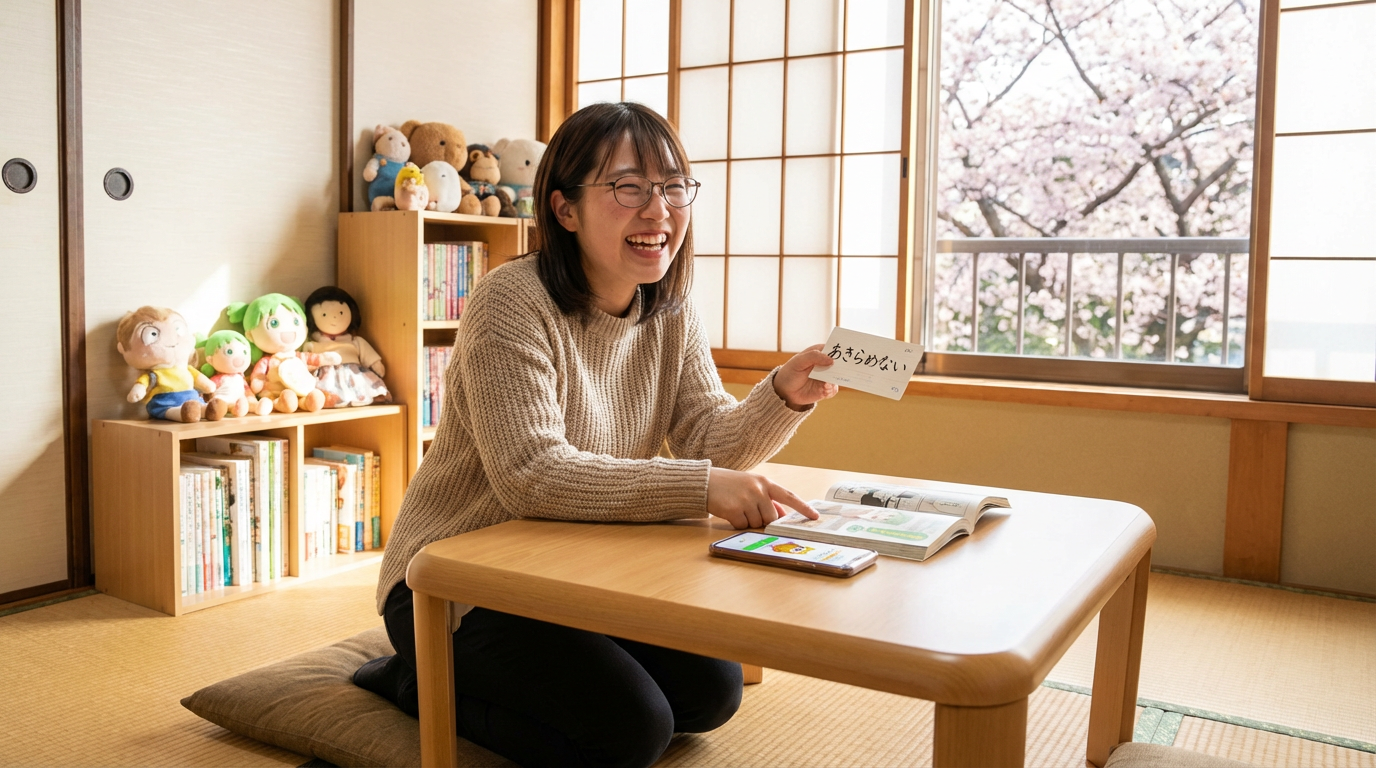
So you've decided to learn Japanese. Maybe it's the anime that pulled you in, the urge to read manga in its original form, a dream trip to Tokyo, or a job opportunity in Japan. Whatever brought you here — welcome. Learning Japanese is one of the most rewarding linguistic journeys you can take, and 2026 is genuinely the best time to start.
Why? Because the learning tools available today are light-years ahead of what existed even five years ago. AI conversation partners, gamified apps, immersive audio courses, and structured community programs have collectively transformed how people acquire Japanese. You no longer need to move to Japan or pay for a private tutor every day to make meaningful progress.
This guide is your complete toolkit: organized by skill type, ranked by effectiveness, and built around a realistic schedule you can follow no matter how busy your life is.
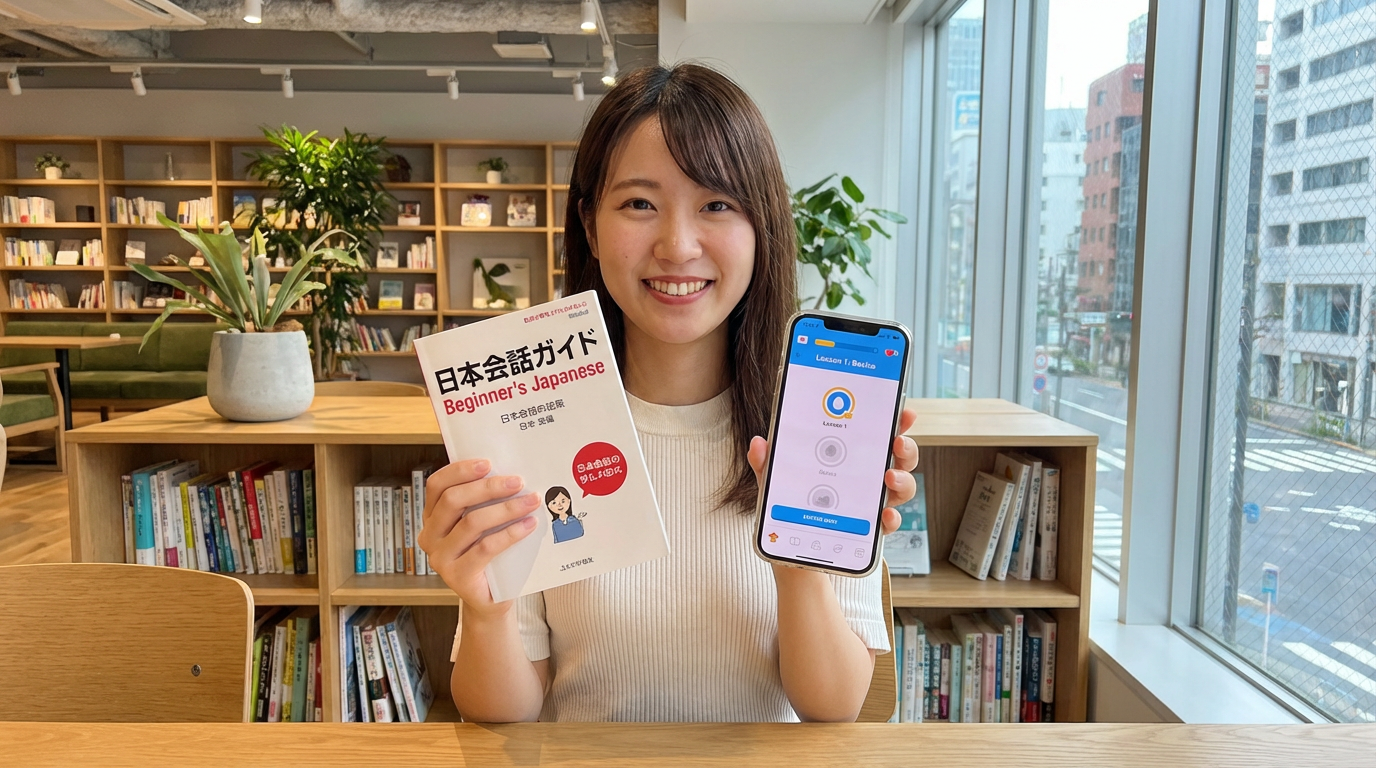
Understanding the Challenge — and the Opportunity
Japanese is famously ranked among the most difficult languages for English speakers by the Foreign Service Institute (FSI), with an estimated 2,200 study hours to reach professional fluency (Category IV). But here's the thing: fluency for communication — the ability to hold real conversations, read signs, and enjoy media — is achievable in roughly 12–18 months of consistent daily practice.
The three hurdles most beginners face:
Three writing systems — Hiragana (46 characters), Katakana (46 characters), and Kanji (2,000+ characters for full literacy)
Verb conjugation and politeness levels — Formal (です/ます), casual, and honorific forms
Lack of genuine speaking practice — Reading and listening alone won't make you fluent
The good news: there's a resource for every one of these problems. Let's get into them.
The Core Japanese Learning Stack (2026 Edition)
Rather than using one app and hoping for the best, the most successful learners build a "stack" — a combination of tools that covers different skills. Here's the framework:
Total: roughly 90–120 minutes per day for steady progress. Too much? Even 30–45 focused minutes per day produces measurable results over months.
🗣️ Speaking & Conversation Practice
1. TalkMe AI ⭐ Top Pick
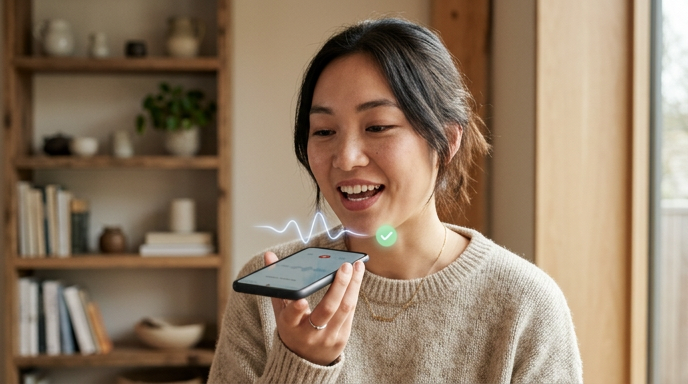
If speaking is your primary goal — and for most learners it should be — TalkMe is the standout recommendation in 2026. TalkMe is an AI-powered conversation platform that lets you practice spoken Japanese at any hour, on any topic, without the anxiety of speaking with a stranger.
What makes TalkMe different from other apps:
Real-time AI conversation in Japanese — You speak, it responds naturally, corrects you gently, and keeps the dialogue going
Adaptive difficulty — Whether you're at N5 level saying 「こんにちは、私はアメリカ人です。」or navigating N2-level business Japanese, TalkMe adjusts
Instant feedback — Grammar, pronunciation, and vocabulary corrections delivered mid-conversation, not in a separate quiz
Zero judgment — Say something wrong? The AI guides you to the right form without embarrassment
For Japanese learners specifically, TalkMe's ability to practice specific situation-based conversations is invaluable:
「すみません、渋谷駅はどこですか?」(Excuse me, where is Shibuya Station?)
「このラーメン、おすすめは何ですか?」(What do you recommend here?)
「会議の資料を準備しました。ご確認ください。」(I've prepared the meeting materials. Please take a look.)
You can practice the same scenario ten times in a row until it feels natural — something no human tutor has the patience for.
👉 Start your free trial at talkme.ai | Read more learning guides at blog.talkme.ai
2. italki — Real Human Tutors
For learners who want periodic sessions with a human tutor to check their progress, italki remains excellent. You can find community tutors (affordable, conversational practice) and professional teachers (structured lessons). Pair it with TalkMe for daily practice between sessions — it's a highly effective combination.
Best for: Intermediate and advanced learners seeking nuanced cultural feedback
Cost: $10–$30/hour depending on tutor
3. HelloTalk — Language Exchange
HelloTalk connects you with native Japanese speakers who want to learn your language. You help them with English; they help you with Japanese. The app has built-in correction tools and voice messaging.
Best for: Making Japanese friends while practicing
Note: Progress depends on finding an active partner — supplement with AI tools for consistency
[図片提示词:A student using a flashcard app on a tablet, with colorful hiragana and kanji cards displayed on screen, modern desk with Japanese stationery and tea]
📚 Vocabulary Building: The Foundation
You cannot speak, read, or listen effectively without vocabulary. The target: 2,000 words for functional conversation; 10,000+ for natural fluency.
4. Anki — The Gold Standard for Spaced Repetition
Anki is the most powerful free flashcard tool ever built. It uses spaced repetition (SRS) — showing you cards right before you'd forget them — which makes vocabulary learning dramatically more efficient than random review.
Setup recommendation:
Download the Core 2000 or Core 6000 Japanese deck (pre-made vocabulary cards with audio, sentences, and kanji)
Review every day, even if only 10 minutes — consistency matters more than session length
Add your own cards for words you encounter in the wild
Free on desktop; one-time fee for iOS (around $25)
5. WaniKani — Kanji Mastery System
Kanji is the mountain most learners fear. WaniKani breaks it down with a clever mnemonics-based SRS system that teaches radicals → kanji → vocabulary in a logical sequence. By level 60, you'll know 2,000 kanji and 6,000 vocabulary items.
Best for: Learners who want systematic kanji mastery
Cost: Free to level 3; ~$9/month or $299 lifetime after that
Timeline: Most users reach a "reading newspapers" level in 12–18 months with consistent daily reviews
6. Duolingo — Gamified Daily Habit
Duolingo's Japanese course covers hiragana, katakana, and beginner vocabulary in a highly gamified format. It's not a complete curriculum, but it's excellent for:
Establishing a daily study habit (streaks, rewards)
Building recognition of basic kanji and grammar patterns
Mobile-first, travel-friendly practice sessions
Best used as: A warm-up routine alongside deeper tools like Anki and TalkMe
🎓 Grammar: Building the Structural Framework
Vocabulary without grammar is a list of words. Grammar is the architecture that turns words into meaning.
7. Genki I & II — The University Standard
The Genki textbook series (Genki I for absolute beginners, Genki II for intermediate) remains the most rigorous and widely-used structured Japanese grammar resource in English. It's used by university Japanese courses worldwide.
What you get:
Structured lessons introducing grammar patterns with explanations and context
Dialogue practice, listening exercises, and writing worksheets
Accompanying workbook for reinforcement
Cost: ~$50–$60 per book; consider the companion Genki Self-Study Room website (free) for additional exercises
8. JapanesePod101 — Audio-Led Grammar + Culture
JapanesePod101 offers a massive library of podcast-style lessons ranging from absolute beginner to advanced. Each episode combines conversation, cultural notes, and grammar explanation in an engaging format.
Best for: Auditory learners who find textbooks dry
Cost: Free tier available; premium ~$10–$25/month
9. Bunpro — Grammar SRS
Bunpro applies spaced repetition specifically to grammar points, helping you actively recall and produce grammar patterns rather than just recognize them. It follows the JLPT syllabus, making it ideal for test preparation.
Cost: ~$3/month; free trial available

🎧 Listening & Immersion
Listening is where language acquisition becomes unconscious — the stage where you stop translating in your head and start understanding directly.
10. Nihongo con Teppei — Best Intermediate Podcast
Nihongo con Teppei is a Japanese podcast for Japanese learners, hosted by native speaker Teppei Sensei. Episodes are short (5–10 minutes), spoken in natural Japanese at a learner-friendly pace, and cover everyday topics.
Why it works: You can listen on the commute, at the gym, while cooking — passive immersion during dead time
Best for: N4–N3 level listeners building natural comprehension
Free on all podcast platforms
11. Shadowing: Let's Speak Japanese — Audio Course
Shadowing is a technique where you listen to native speech and repeat it simultaneously, mimicking rhythm, intonation, and pronunciation. The Shadowing: Let's Speak Japanese audio course by Hitoko Saito and Miho Takeda is specifically designed for this technique.
Why it's powerful: Shadowing activates your mouth and brain simultaneously, building muscle memory for pronunciation and fluency faster than silent study
12. Netflix + Language Reactor
Language Reactor (formerly Language Learning with Netflix) is a browser extension that adds dual subtitles to Netflix content — Japanese and English simultaneously. You can click any word to see its meaning and add it to a flashcard deck.
Best Japanese content for learners:
Midnight Diner (ごはん前後の深夜食堂) — Natural conversational Japanese
Terrace House — Unscripted, real-world Japanese
Spirited Away / Studio Ghibli films — Familiar stories in clear Japanese
✍️ Reading: From Kana to Kanji
Once you can read hiragana and katakana (achievable in 1–2 weeks of focused study), reading practice becomes one of your most powerful tools.
13. NHK Web Easy — Real News, Simple Japanese
NHK Web Easy (www3.nhk.or.jp/news/easy/) rewrites real NHK news articles in simpler Japanese with furigana (pronunciation guides over kanji). It's completely free and updated daily.
Best for: N3–N2 learners who want to practice reading authentic content
14. Satori Reader — Graded Reading Subscription
Satori Reader offers graded stories that adapt to your vocabulary level, with built-in dictionary lookups and audio narration. The stories are engaging narratives — not textbook exercises — which makes consistent reading practice much easier.
Cost: ~$9/month; free sample stories available
15. Manga in Japanese
Once you've covered ~500–1,000 vocabulary items, Japanese manga becomes a fantastic reading resource. Start with:
Yotsuba&! (よつばと!) — Widely recommended for beginners; natural conversational Japanese, simple kanji
Doraemon — Familiar, approachable, child-friendly vocabulary
One Piece / Naruto — More complex but highly motivating for fans
The key is to read what you want to read. Motivation sustains learning; obligation kills it.
📅 Your 90-Day Japanese Learning Jumpstart Plan
Here's a concrete starting plan combining the resources above:
Week 1–2: The Foundation
Hiragana & Katakana: Use free online charts + Anki or the Dr. Moku app — master both scripts in 2 weeks
Duolingo: 5 minutes/day to build habit
TalkMe: Start simple conversations — 「こんにちは」「ありがとうございます」「すみません」
Week 3–4: First Grammar Blocks
Genki I Lessons 1–3: Basic sentence structure (N は N です。/ V ます form)
Anki Core 2000: Start the deck, review daily
TalkMe: Practice introductions — 「私は[名前]です。アメリカ出身です。」
Month 2: Vocabulary Acceleration
WaniKani: Begin Level 1–5 (radicals and basic kanji)
Nihongo con Teppei for Beginners: Start listening daily
TalkMe scenarios: Basic shopping, asking directions, ordering food
Month 3: First Real Conversations
Genki I Lessons 7–12: Te-form, past tense, て-form requests
Netflix + Language Reactor: Watch 2–3 episodes per week
TalkMe: Full 15-minute sessions on specific topics
NHK Web Easy: Read one article per day with a dictionary
Progress benchmark at 90 days: Comfortable with basic conversation, can read hiragana/katakana fluently, know ~300–500 words, recognize 50–100 common kanji.

Common Mistakes Japanese Learners Make (and How to Avoid Them)
1. Spending too long on hiragana before speaking
Some learners spend weeks perfecting kana before saying a single word aloud. Don't. Start speaking from day one — even badly. Use TalkMe or HelloTalk immediately.
2. Studying grammar rules without using them
Grammar is only internalized through use. For every grammar pattern you learn in Genki, practice it in a conversation on TalkMe or write 5 example sentences.
3. Ignoring kanji until "later"
There is no "later" with kanji. Start WaniKani in your first month. The longer you wait, the more your reading progress falls behind your speaking progress, creating an imbalance that's hard to correct.
4. Consuming only English-subtitled Japanese content
Japanese subtitles (or no subtitles) force your brain to process the language. English subtitles let your brain default to reading rather than listening. Use Language Reactor's Japanese-only mode.
5. Skipping the polite forms
Japanese has context-specific politeness levels. Don't assume the casual forms you pick up from anime are appropriate everywhere. Learn both formal (です/ます) and casual forms from the start.
Choosing Your Path: Three Learning Profiles
FAQ: Japanese Learning in 2026
Q: How long does it take to learn Japanese?
A: Functional conversation ability typically requires 300–500 hours. Professional fluency is 2,000+ hours. With 1–2 hours per day, most learners reach a satisfying conversational level in 12–18 months.
Q: Should I learn hiragana or romaji first?
A: Always hiragana first — skip romaji entirely. Romaji creates a crutch that slows your progress and confuses your pronunciation. Hiragana takes 1–2 weeks; it's a worthwhile investment.
Q: Is Japanese grammar really as hard as people say?
A: Japanese grammar is actually very regular (unlike French or Russian irregular verbs). The challenge is that sentence structure is opposite to English (Subject-Object-Verb instead of Subject-Verb-Object), and there's a lot of context-dropping. It takes adjustment, but most learners find it becomes natural faster than expected.
Q: Can I learn Japanese without learning kanji?
A: Technically yes for speaking, but you'll be severely limited in reading any Japanese content, navigating Japanese websites, or reading menus and signs. Kanji is unavoidable for real-world literacy.
Q: What's the best single app for learning Japanese?
A: No single app covers everything, but if forced to choose one, TalkMe delivers the most critical skill — actual speaking ability — that other apps neglect. Combine it with Anki for vocabulary and you have 80% of what you need.
Q: Is JLPT certification worth pursuing?
A: Yes, especially if you're planning to work or study in Japan. N3 is a solid intermediate benchmark; N2 is required for many professional environments. Bunpro and JLPT-specific practice tests are your best prep tools.
Final Thoughts: Start Small, Start Today
The biggest barrier to learning Japanese isn't difficulty — it's starting. The scripts look intimidating. The grammar feels alien. The kanji mountain seems impossible to climb.
But every fluent Japanese speaker once stared at the same hiragana chart you're looking at now.
Build your stack, commit to 30 minutes a day, and lean into AI-powered tools like TalkMe that give you genuine speaking practice without the fear of judgment. Check in regularly at blog.talkme.ai for more language learning guides, tips on JLPT preparation, and strategies for making Japanese stick.
あなたならできる。You've got this.
Want more language learning guides like this one? Visit blog.talkme.ai for resources on learning Japanese, Korean, Spanish, and more — or go straight to talkme.ai to start your first AI conversation today.


Comments
No comments yet.
Leave a Comment