
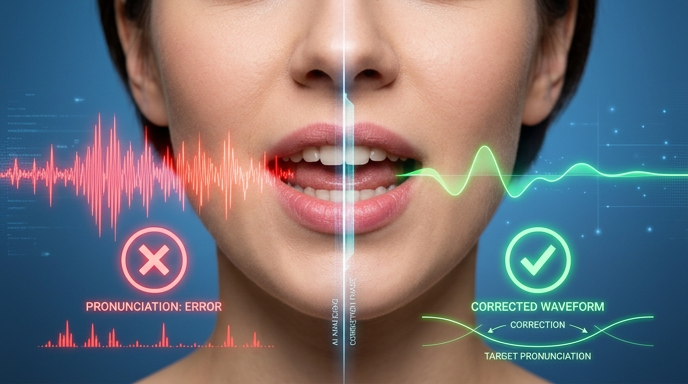
If you've ever searched for an AI-powered pronunciation tool, you've probably noticed two categories: pronunciation checkers and pronunciation correctors. They sound similar — and plenty of people use the terms interchangeably — but they're actually solving two completely different problems. Knowing which one you need can save you months of frustration.
What Is an AI Pronunciation Checker?
An AI pronunciation checker uses speech recognition to compare your spoken input against a standard model of the language. It listens to you say a word or phrase, then tells you whether it matched the expected pronunciation.
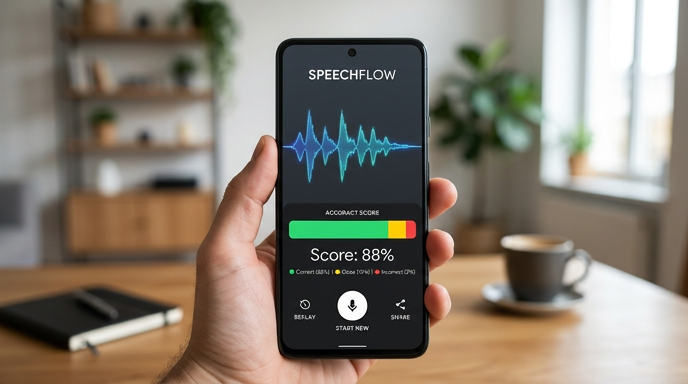
Think of it as a spellchecker for your voice. Tools like NativeSpeech and Pronounce fall into this category. They give you a score, highlight which syllables you messed up, and leave it at that.
The experience typically goes like this: you speak, the tool processes your audio, and you get a result — "85% accurate" or "needs improvement on the /θ/ sound." It's diagnostic. It tells you what's wrong. But here's the thing: diagnostic tools don't teach.
The Critical Difference: Checker vs. Corrector
This is where most learners get stuck. Let's say you use a pronunciation checker and it marks your "th" sound as incorrect. Now what? You know you're saying it wrong. But you still don't know:
What position your tongue should be in
How much air to push through your teeth
What the correct mouth shape looks like
How to practice it until it sticks
A pronunciation corrector fills that gap. It doesn't just flag problems — it gives you a path to fixing them. It might show you a visual tongue placement guide, play native audio for comparison, or offer real-time feedback as you practice.
The difference is simple:
Checker = diagnosis. It names the problem.
Corrector = treatment. It helps you solve it.
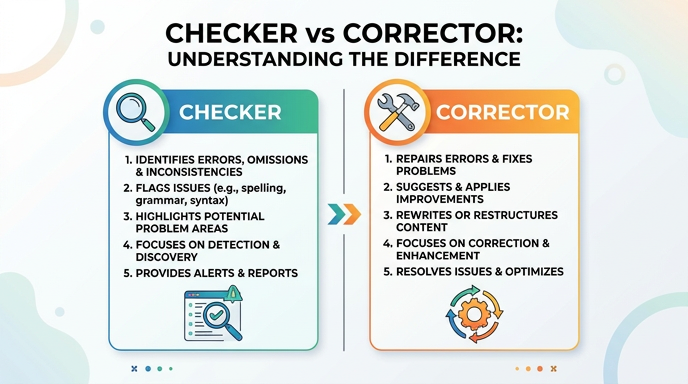
A lot of learners download a checker, get frustrated that their score isn't improving, and assume the tool doesn't work. The tool worked fine — it just wasn't designed for the job they needed done.
Top AI Pronunciation Tools Compared
Here's how the major players in this space actually differ:
NativeSpeech
A dedicated pronunciation checker. It provides detailed phonetic analysis and scores your accuracy against native-speaker benchmarks. Strong on diagnosis, but it doesn't offer corrective exercises or practice routines. Best for learners who already know how to self-correct.
SpeechAce
Sits somewhere between checker and corrector. It evaluates your speech and provides some guidance — but it's primarily a testing and assessment platform rather than a practice companion. Commonly used by language schools and online tutors for placement tests.
Pronounce AI
A solid checker with a focus on clarity scores and pitch analysis. It excels at identifying which specific words or sounds need work. Like NativeSpeech, it leans heavily toward detection rather than correction — you'll know exactly where you're weak, but bridging that gap is on you.
BoldVoice
Takes an accent-coaching approach with video lessons from Hollywood dialect coaches. Strong on correction for specific accent targets (especially reducing non-native accents in American English). The video format is engaging, but the curriculum is fixed — you follow their path, not necessarily yours.
TalkMe
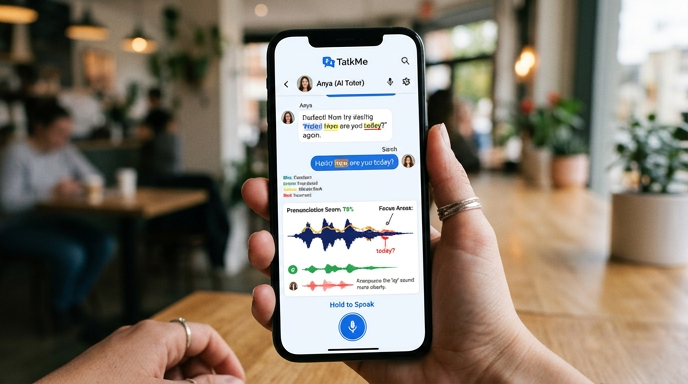
TalkMe takes a fundamentally different approach: it's a conversation-first pronunciation corrector. Instead of making you repeat isolated words into a microphone, TalkMe evaluates your pronunciation in the middle of real conversations — and corrects you on the spot. You're not just saying a word correctly in a vacuum; you're learning to pronounce it right while thinking about what to say next, which is how real speaking works.
The key differentiator is that TalkMe is checker + corrector in one. It detects mispronunciations during conversation and immediately shows you the correct way to say it, with audio playback and visual guidance. You don't finish a session and get a report — you get feedback while you're speaking, which builds muscle memory faster.
Which One Do You Actually Need?
Ask yourself one question: Do I know how to fix my pronunciation on my own?
If yes — you've studied phonetics, you understand tongue placement and airflow, and you just need a tool to flag mistakes — a checker like NativeSpeech or Pronounce AI will serve you well.
If no — and this describes the vast majority of learners — you need a corrector. A tool that doesn't just say "that's wrong" but shows you the path to "here's how to say it right."
Most people fall into the second group. And that's why many learners end up downloading three different apps before finding one that actually moves the needle.
The good news: you no longer have to choose between checking and correcting. Modern AI conversation tools like TalkMe bundle both functions — real-time pronunciation detection with instant corrective feedback — in a single experience that mimics talking to a patient native speaker who gently guides your accent while keeping the conversation flowing.
So before you download yet another app in frustration, take a minute to define what you're really after: a diagnosis, or a path to improvement.



Comments
No comments yet.
Leave a Comment