
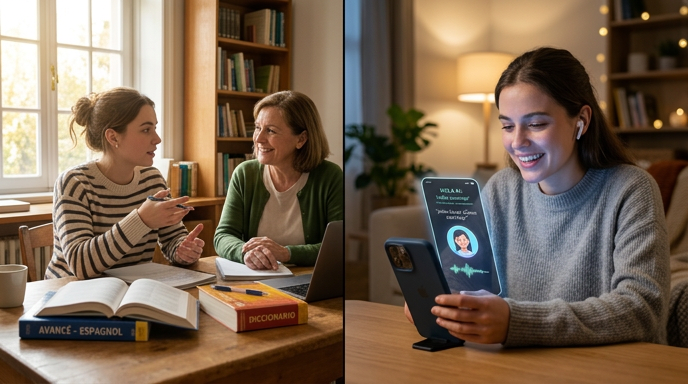
When I first started learning Spanish, I did what most people do—I booked weekly sessions with a human tutor on Italki. One hour every Tuesday evening, rain or shine. For the first three months, I was unstoppable. My tutor was patient, encouraging, and knew exactly when to correct my pronunciation.
Then life happened. A work deadline pushed Tuesday to Thursday. Thursday became "I'll double up next week." Six months in, I was down to one session every three weeks, struggling to remember basic verb conjugations between calls.
I hear this story constantly from fellow language learners. And it is not about motivation—it is about the architecture of the commitment itself.

The Human Tutor Model: Depth Over Frequency
A great human tutor delivers something AI cannot fully replicate: genuine empathy, cultural nuance explained through lived experience, and the ability to read a student's facial expression and know they are lost even when they say "I understand."
The typical model is one or two hours per week. In that hour, you are fully immersed—speaking, listening, being corrected in real time. It is intense, mentally draining, and often incredibly effective… while it lasts.
The problem? The gap between sessions. Forty-eight hours after a lesson, retention drops sharply once you stop using the language. By day five or six—right before your next session—you have forgotten chunks of what you practiced. Each lesson starts with a warm-up that eats into productive time, rebuilding ground you already covered last week.
One hour of deep focus, followed by six days of near-zero practice—does that sound like a recipe for fluency?
The AI Tutor Model: Frequency Over Intensity
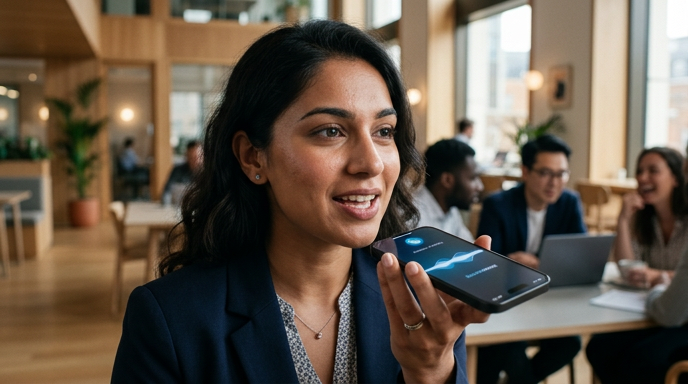
Now picture this: instead of one hour every Tuesday, you spend ten minutes every single day. On the bus. While making coffee. Before bed. No scheduling, no cancellation fees, no social anxiety about showing up unprepared.
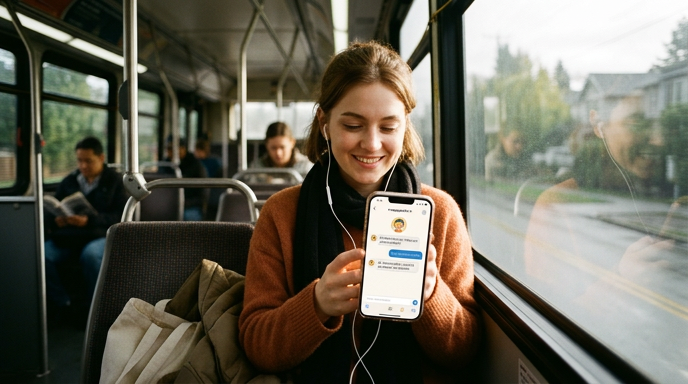
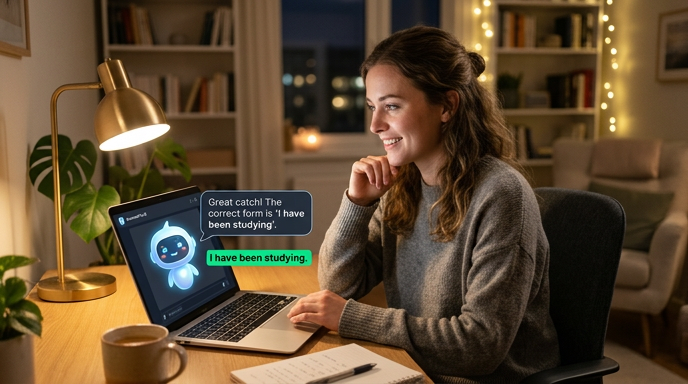
An AI tutor does not get tired. It does not judge you for forgetting the word for "umbrella" for the tenth time. It is available at 2 AM when you cannot sleep and decide to practice Japanese particles. It gives you instant feedback on pronunciation, corrects your grammar mid-sentence, and—crucially—it tracks what you struggle with and brings those items back for review at the optimal interval.
This is frequency without friction. Ten minutes daily over one year is over sixty hours of active speaking practice—comparable to a year of weekly one-hour human sessions, but spread across 365 touch points instead of 52.
Which Approach Wins Long-Term?
Here is where the data makes the case clear: language acquisition follows a compounding pattern, not a sprint pattern. Research in spaced repetition and distributed practice consistently shows that frequent, shorter exposures outperform massed, longer sessions when measuring long-term retention.
Think of it like compound interest in finance. Fifteen minutes daily at a steady pace generates more total growth than a two-hour deep dive once a week, because the learning never fully decays between deposits. The "forgetting curve" flattens when you never give your brain enough time to forget.
A friend of mine—an engineer in Tokyo—summarized it perfectly: "Year one: thirty minutes of human tutoring once a week, felt great but plateaued after six months. Year two: fifteen minutes of AI speaking practice every morning on my commute. By December, I could hold a thirty-minute conversation in Japanese without panicking. The total practice time was similar. The result was not."
That is the sustainability argument in one anecdote: frequency times time beats intensity times infrequency.
Making the Case for a Combined Approach
Here is the takeaway I did not expect when I started researching this topic: the best answer is not choosing one over the other.
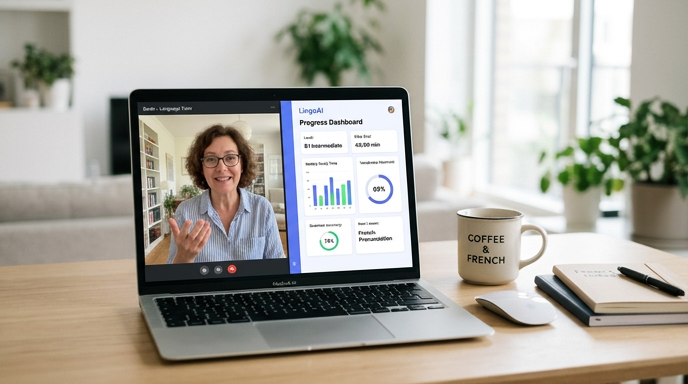
Use an AI tutor as your daily driver—your low-friction, always-available practice companion that keeps the language alive in your brain every single day, corrects your mistakes without embarrassment, and builds the habit that actually sticks. Tools like TalkMe's AI tutor make this seamless with digital human avatars that simulate real conversation, progress tracking that shows exactly which vocabulary and grammar points need reinforcement, and bite-sized sessions that fit into the gaps in your day—waiting for coffee, commuting, winding down before bed. The low barrier to entry means you actually show up, and showing up daily is the entire game.
Then, layer in a human tutor once every two weeks—not as your primary practice engine, but as a calibration session. Use that session to tackle the nuanced questions that have piled up, to get cultural context on phrases you have encountered, and to validate that your pronunciation has not drifted off course. The human session becomes richer because you arrive prepared, with specific questions rather than a blank slate.
Final Thoughts
The debate "AI tutor versus human tutor" frames it as a zero-sum choice. It is not. The real question is: what architecture of learning will you actually sustain for the next twelve months?
For most busy adults—juggling work, family, and the chaos of daily life—a daily ten-minute AI practice habit plus a biweekly human check-in delivers dramatically better long-term results than a weekly hour with a human tutor alone. Not because AI is "better" than humans at teaching. But because the system that fits your life is the system you will actually stick with.
That is what sustainable language learning looks like: not perfect, just consistent.
Comments
No comments yet.
Leave a Comment