
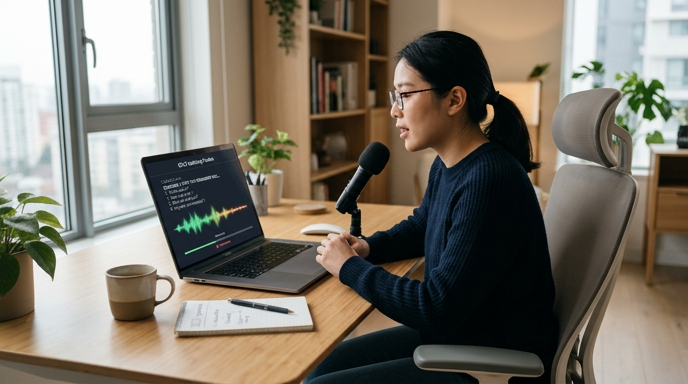
The Real Struggle of IELTS Speaking Preparation
Anyone who has prepared for the IELTS speaking test knows the drill. There are dozens of Part 2 cue card topics ranging from describing a childhood memory to explaining a technological innovation, unpredictable Part 3 follow-up questions that test your ability to think on your feet, and a strict 11-to-14-minute time limit. You need real speaking practice—not just reading sample answers or memorizing scripts.
The problem is that quality speaking practice is expensive. A single one-hour session with a qualified IELTS tutor can cost anywhere from $30 to $80 depending on where you live. If you want to practice three times a week for two months leading up to your exam, you are looking at over $700. For most test-takers—students, young professionals, immigrants—that number is simply not realistic.
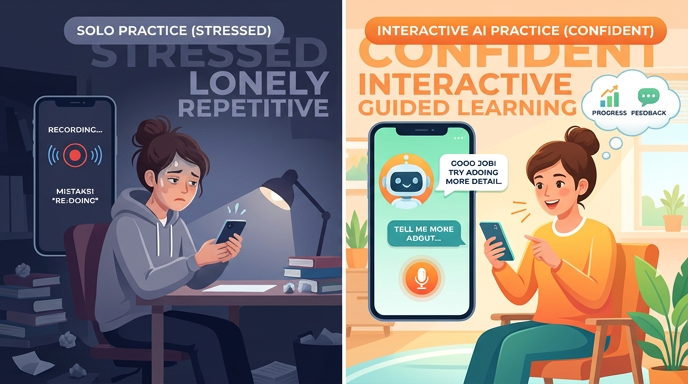
Self-practice has its own limitations. You can record yourself speaking, but without objective feedback on your fluency, lexical resource, grammatical range, and pronunciation, you are essentially practicing in the dark. You might be reinforcing bad habits without knowing it, and your confidence on test day will not be where it needs to be.
What AI Brings to IELTS Speaking Practice
This is where AI-powered speaking practice fundamentally changes the preparation game. A dedicated AI IELTS tool can do several things that were previously only possible with a human tutor:
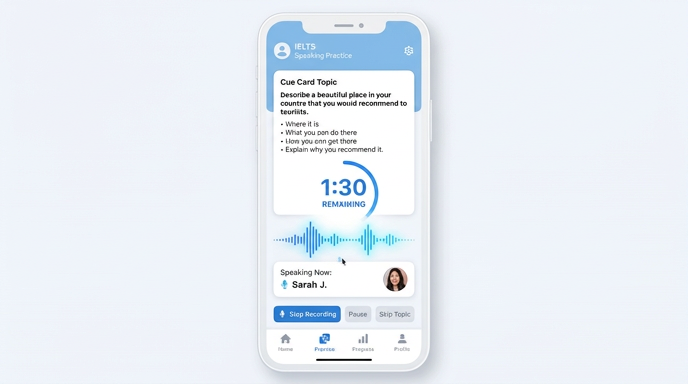
Full three-part exam simulation. The AI acts as an examiner, asking Part 1 introductory questions about familiar topics like work, studies, or hobbies. It then presents a random Part 2 cue card and gives you one minute to prepare before you speak for up to two minutes. Finally, it asks relevant Part 3 discussion questions that go deeper into the Part 2 theme—exactly like the real test.
Instant scoring across all four criteria. After each response, the AI analyzes your performance based on the official IELTS speaking band descriptors: fluency and coherence, lexical resource, grammatical range and accuracy, and pronunciation. You get a band score estimate with specific suggestions on where you lost points and what to improve.
Randomized cue cards from real question banks. Part 2 is often the most nerve-wracking section because you do not know what topic you will get. AI tools can pull from extensive IELTS question banks and generate random cue cards so you build the mental agility to handle any topic under timed conditions.
Unlimited practice, zero scheduling. Unlike booking a human tutor, you can practice at 6 AM before work, during your lunch break, or at midnight when you cannot sleep. The frequency is entirely up to you—and frequency is what builds fluency.
Comparing the Top AI IELTS Speaking Tools
The landscape of AI-powered IELTS preparation is growing fast. Here is how the key players compare:
IELTS Rewind (ieltsrewind.com) is one of the more established platforms focused specifically on AI-driven IELTS preparation. It offers AI-powered feedback on both writing and speaking sections, with instant band scores and detailed suggestions. The platform covers all four IELTS sections, which is useful if you want a single dashboard for your entire prep, though its speaking module is part of a broader toolkit rather than a deeply specialized speaking companion.
IELTS Tutor (ieltstutor.com) serves primarily as an information hub for IELTS test-takers, offering guidance on test format, scoring criteria, and preparation strategies. It is a solid starting point for understanding what the exam requires, but it is more of a reference resource than an interactive practice tool.
TalkMe takes a conversation-first approach to IELTS speaking preparation. Rather than simply presenting scripted prompts, its AI conversation engine simulates a natural examiner interaction across all three parts of the speaking test. You draw a random cue card topic, speak your answer naturally, and the AI provides structured feedback on fluency, vocabulary range, grammar accuracy, and pronunciation. Because the system is built on adaptive conversation AI, every session feels different—no two cue card draws or follow-up discussions are the same. This unpredictability is valuable because it mirrors what happens in the real exam.
The Smart Combination: AI Drills + Human Mock Tests
AI speaking practice is powerful, but the smartest preparation strategy combines both approaches.
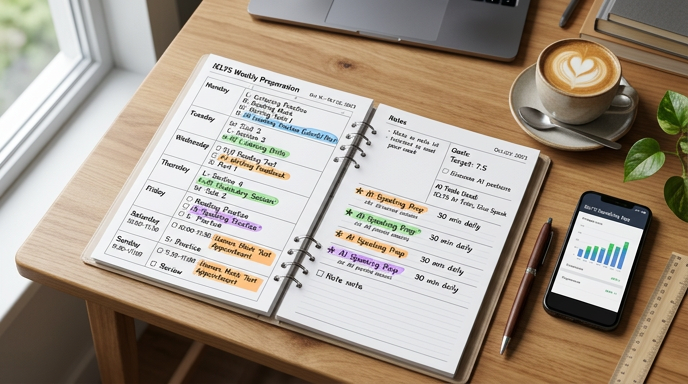
Use AI for high-frequency drilling. Practice one full speaking test every day with AI feedback. This builds the muscle memory of thinking and speaking in English under time pressure. The volume you can achieve with AI—daily, sometimes twice a day—is simply impossible to match with human tutors. Before your exam, aim to have completed at least 30 to 40 full simulated speaking tests.
Then schedule a human mock test once every week or two. A qualified examiner or experienced tutor can catch nuances that AI might miss: body language, eye contact, the natural rhythm of turn-taking in conversation. They can also give you a more accurate band score estimate based on real examiner training and criteria.
Practical Tips for AI-Powered IELTS Speaking Prep
After working extensively with these tools, here are the tips that make a measurable difference:
Review before you repeat. After every AI practice session, spend five minutes reading the feedback carefully. If the AI flagged a grammar error or suggested a more precise vocabulary choice, write it down and consciously use the corrected version in your next session. Quantity matters, but quality of review matters just as much.
Simulate real test conditions every time. Close all other tabs and apps, sit at a desk rather than on your bed, set a timer, and speak at full volume. Whispering or mumbling does not count. The closer your practice environment is to the real test center, the less nervous you will feel on exam day.
Track your weak areas with data. If you consistently score lower on Part 3 discussion questions, dedicate extra sessions to that section. If pronunciation is your bottleneck, isolate pronunciation drills. AI feedback gives you concrete data that lets you practice strategically rather than randomly.
Start early and build volume. Two months of daily 20-minute AI practice sessions will do far more for your speaking confidence than cramming four expensive tutoring sessions the week before your exam. The goal is to walk into the test center feeling like you have done this a hundred times already—because with AI tools, you actually can.
Comments
No comments yet.
Leave a Comment